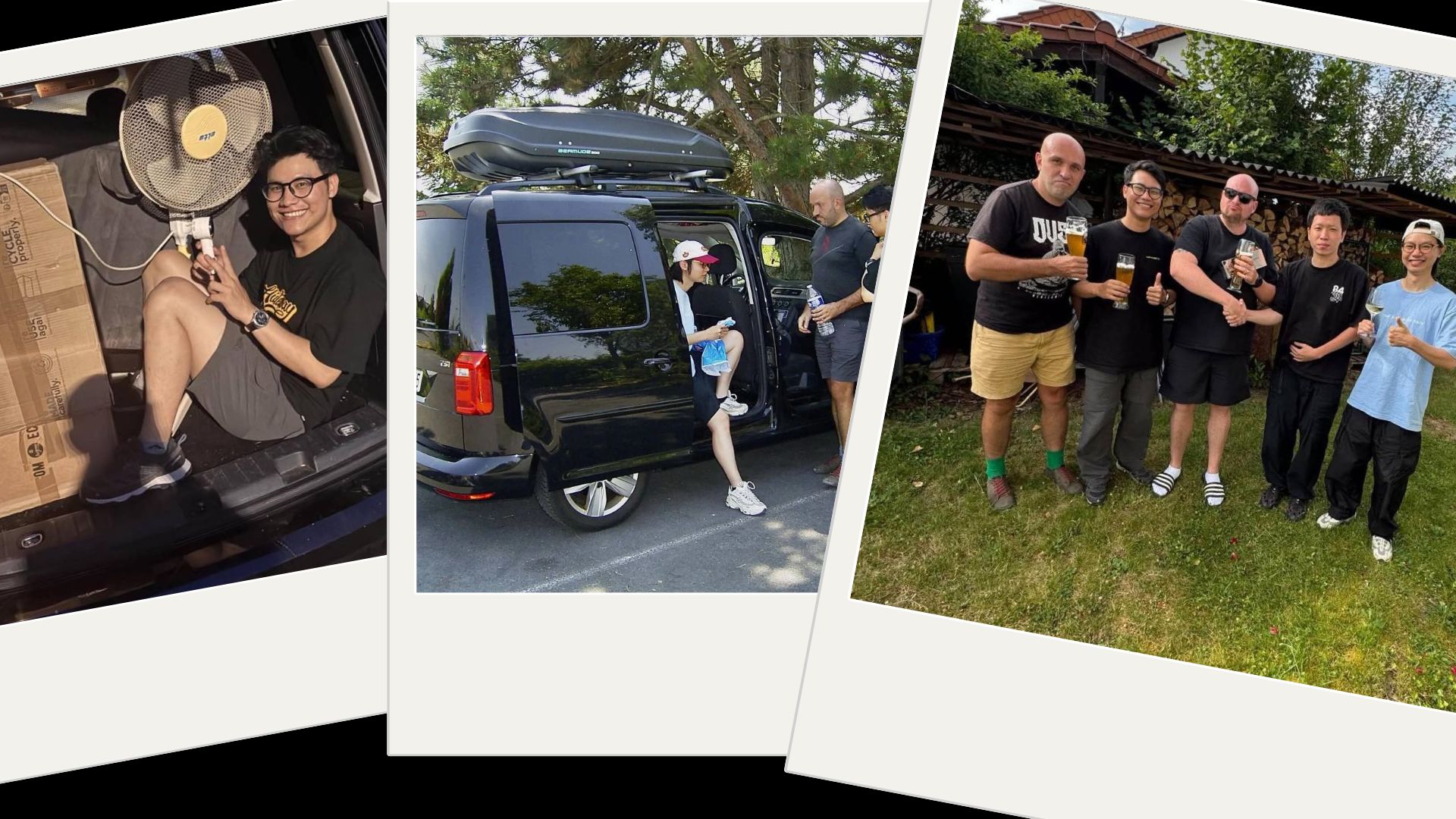
For years, Cút Lộn has been a staple name in the Vietnamese underground scene. Their story begins in 2018 in Hanoi, and ever since, the band has not stopped. Several lineup changes, drastic stylistic shifts, and a move to the opposite side of the country. This might look like one unstable mess, but in their case, it’s all a part of an evolution into the imperfect-perfect form of art.
On their almost a decade-long journey, the band released three albums and a few singles. This release frequency got them playing slots across the SEA region, a week-long China tour, and their first EU tour this summer. Needless to say, they are one of the most active bands in Vietnam, playing local shows with peers from Hanoi and Saigon and supporting international acts passing through. No matter the stage, Cút Lộn always seems to put on a great show, and the audience shows up in spades.
I’m glad to have seen most of their growth and spent a lot of time with each member, and the band as a whole, over the years to store it all in my memory. Now they’ve finally agreed to a sit-down and let me officially document it. They share a few stories with me and Ethos’ audience. Since most of the guys are camera-shy, we decided to do it old-school: an audio recorder and a (digital) pen and paper.
We talked about their latest adventure, a three-week-long EU tour, something many Vietnamese bands can only dream of, their writing philosophy, scene points of view, and more. It’s a long one, so better get a beverage and a comfy chair. The fun is guaranteed, though! So let’s get into the “eggoverse.”
Fines, Phở Cravings and Vegan Lasagna
E: Alright! Say something to make sure it’s working…
Vui Qá (vocal): Ch-cheeeeeck! Ch-cheeeeeeeeeckkkk!!! Can I have a 300 millisecond delay with 20% feedback on my vocal? Thanks. (Everyone laughs)
E: Let’s start from the end! There’s no need to introduce you guys or ask about your origins. I feel like that story has been told already. So let’s focus on your latest endeavour, your first European tour and what’s coming after it!
CL: We survived! (hahaha)
Quang (guitar): We came back with two parking tickets… and ONE speeding ticket!!
Nguyên (bass): Oh shit!! You got a speeding ticket?
Quang: Yeah, 28 euros. In Trutnov, where we played Obscene Extreme. One in Budapest, Hungary. And one in Kraków, at the fucking LIDL parking lot!!!
Nguyên: Yeah, we’ve been shopping at LIDL every day during the tour, so we’ve been to like 20 of them by then. This time Vui Qá saw the “NO PARKING” sign, but Quang was like: “It’s fiiiiiineeee, it’s a supermarket bro”.
So we literally just got one coffee at that store and as soon as we came out we saw a person in uniform giving us a ticket. That was like 20 euros for a cup of coffee. (hahaha)
E: Any other negative stuff? If that’s the worst that happened, then you’re golden!
Nguyên: I’ve come to appreciate Vietnamese food much more!
E: Ohhh, I can relate! I agree 100% with this statement. Not just Vietnamese, any Asian food in Europe is… hmmm… how to put it mildly… terrible. (hahaha)
Did you have any Vietnamese food while out there?
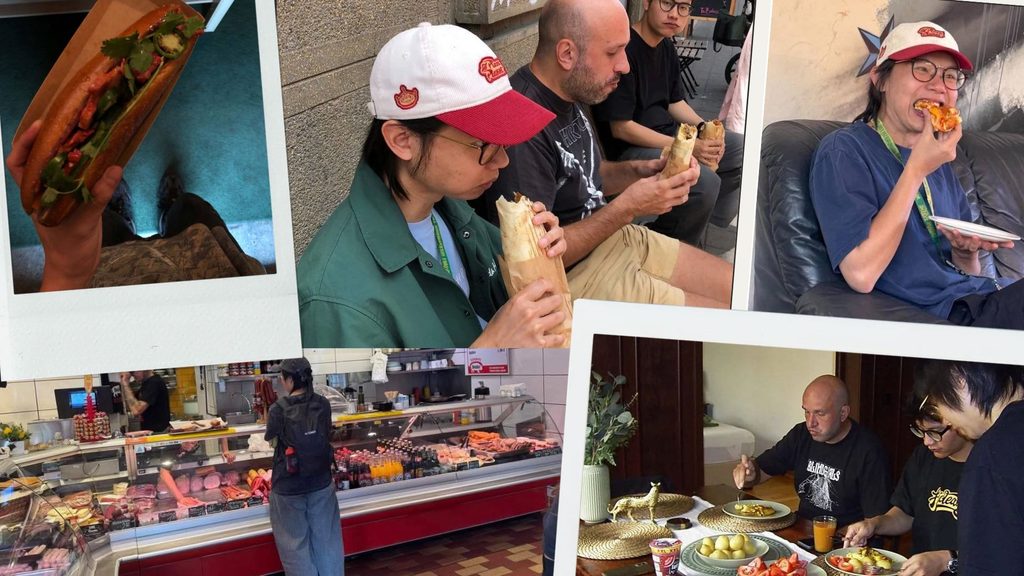
Nguyên: We had the best bánh mì ever in Malmo, Sweden! The gig was organized by the venue Plan B, which has a Vietnamese chef. It was a free entry Vietnamese themed party and we were the only band on the bill with some DJs. And they were selling bánh mì so we were super lucky to get some too!!
I think it was one of the best bánh mì in my life, ’cause at that time we were so close to having 15 euros phở. That was the second to last day of our tour so yeah… Me and Vui Qá cannot do vegan food… (hahaha)
Vui Qá: The thing about Europe is that punks and hardcore kids there are mostly vegan. So the promoters there would usually prepare vegan food too. So every day I ate fucking vegan!!
In Ostrava the promoter asked me: “Yo, what you guys wanna eat tonight” and I looked him in the eyes and said: “Can we pleeeease have something NON VEGAN?” and later on we sat with his friends and he was telling this story being like: “Oh, those bastards!” (hahaha)
Quang: In Hamburg, Vui Qá was so close to having a mental breakdown due to lack of protein… He was just outside the venue, chain smoking. And then they cooked a reeeeal fucking good lasagna for us. It was vegan of course, but it looked and tasted exactly like a real lasagna would be.
So we sent him a photo asking to come back and he came and had a meal and he was soooooo happyyyy!! (Hahaha)
Vui Qá: Actually, I knew it was vegan, I knew it, but it was a reeeeally good one!
Sergey (drums): It was the best lasagna I had in my life!!
Vui Qá: The Hamburg show was very cool! We also got a chance to play with Yacoepsae. It’s a legendary fastcore / powerviolence band from Hamburg. They’re super sick live!!
E: Any other memorable feasts while on the road? Maybe Europe’s favorite street food – kebab? (Everyone laughs)
Nguyên: We were joking about calling our next run “The Kebab Tour”. Just going around every city in Europe and trying every single kebab to find the best one. I think the best kebab we had was in Sankt Wendel. What do you guys think?
Sergey: My favorite was in Amsterdam actually.
Nguyên: Mine was in Sankt Wendel, the one that came with rice. So good!!
E: How was Berlin? That’s like a 50/50 city. People either love it or hate it.
CL: For us it was great!!
Sergey: I walked like 40 or 45 kilometers one the next day after the show (hahaha). I would never believe it if I hadn’t seen my friend’s steps tracker app on their phone!!
Vui Qá: Oh my God, I love Berlin!! I’ve seen the entire city I think.
Sergey: Also, Berlin was the best show merch-wise. And it was a sold-out show. We had a couple of sold-out shows on this tour. Plus, many Vietnamese people came to check us out. The city has a big Vietnamese community. Berlin and Paris were the biggest when it comes to Vietnamese crowds.
Quang: Also, in Budapest too!
E: Yeah, I’ve just been to Budapest too and I was surprised with the number of Vietnamese I’ve seen on the streets or heard in restaurants in the old city center.
So with these people – did they know about you? Or did they come because they knew you guys are Vietnamese?
Sergey: I think it was like 50/50. Some of them came because they knew the band before and there were also people who just came with their friends or because they saw that a Vietnamese band was playing.
E: Did you make any new fans out of this Vietnamese crowd?
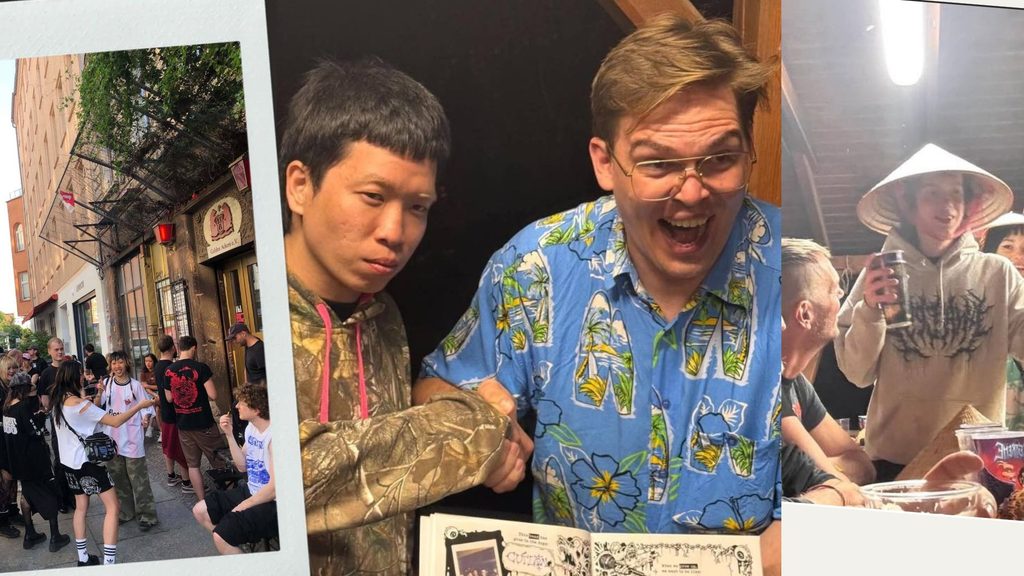
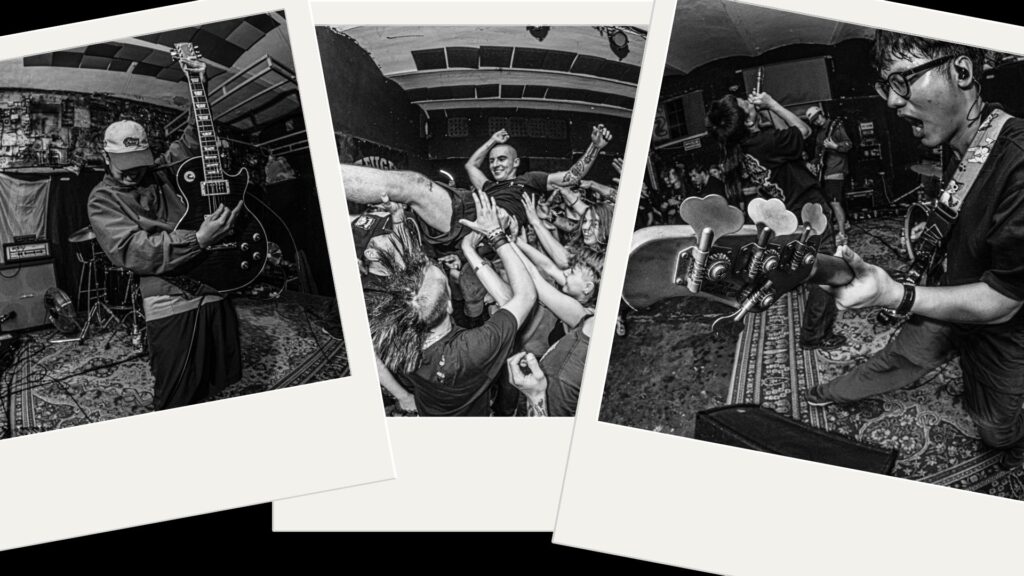
CL: Yeah, probably! After every show, they always came to say hi, buy merch and hang out a bit! Most of the shows were in like 100-cap rooms, so it was always a very cozy and friendly atmosphere. We exchanged contacts with lots of people, not only the Vietnamese crowd actually.
Five-Minute Soundcheck and Chaos in the Forest
E: Was the Obscene Extreme the only bigger show you guys played?
CL: Yeah, and the only festival show.
E: So how was that compared to everything else?
CL: Crazy!!
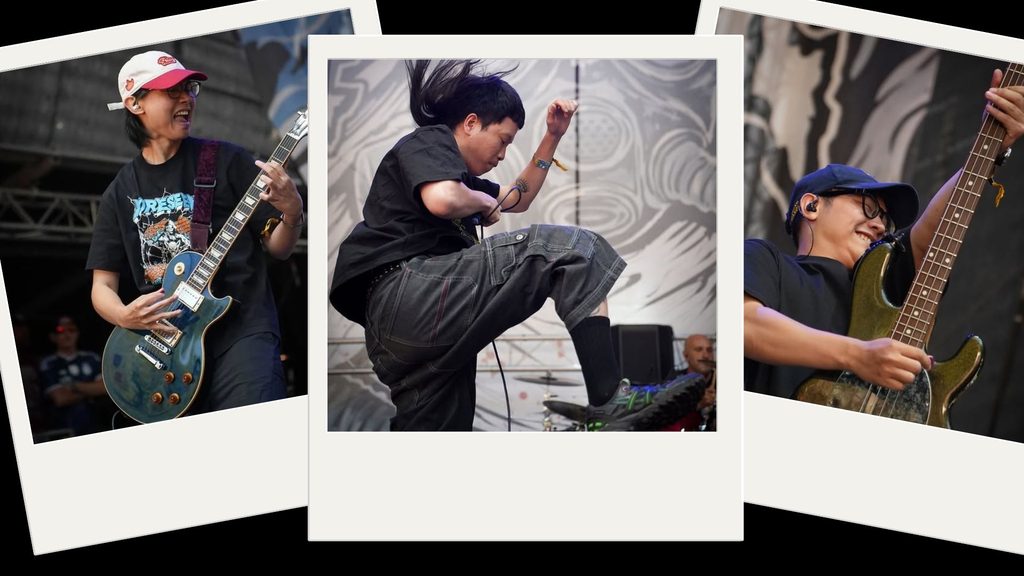
Nguyên: I didn’t break a sweat! It was a revelation when I played Obscene Extreme – like, that’s how Europeans can do a summer festival. That doesn’t make sense in Vietnam, I would sweat and die in the sun. But when we were playing Obscene Extreme, it was 3 PM, it was windy and cool, and it was such a pleasure to play.
Vui Qá: The show was right after the heat wave across all Europe. So it was already much better than just a few days ago. The nights got colder too, so it was fine.
E: Also, Obscene is basically in a forest.
CL: Yeah, in a park. That definitely helped.
E: Can you tell me more about the experience of getting there? I guess it’s very different from anything you played before, organization-wise. The logistics, their team, how they do their thing.
Sergey: I think it’s really cool that Obscene Extreme feels like a festival organized by a bunch of friends, a bunch of DIY guys, but at the same time it’s super professional. The security guys on stage know how to behave properly when somebody is in a bit of danger. Growing up in Russia and going to bigger shows that had security, I always kind of hated them because they didn’t know how to behave. But these guys were perfect.
One of the security guys loved our set so much, and he’s from Ostrava, so he told us right after our set that he would definitely come to see us in Ostrava, because we played there a couple of days after. And he did!
Vui Qá: I talked to the volunteers there and most of them have been with the festival for so many years. It’s based on fans and that ecosystem, so everyone is very friendly. Usually a festival has that vibe of being professional, a big thing. But I didn’t feel any pressure on stage. The audience was having so much fun, the volunteers were supportive. It was really fun.
E: What about soundchecks and the technical side of things?
Sergey: We only checked for five minutes before our set. We came on stage, checked and played right away. They have four days and every day starts at 10 AM, so there is no time for a proper soundcheck. And most of the bands, like us, just come for the day, play, and then pack up for the next destination.
E: You also organize a lot of shows here. Are there any takeaways for you personally?
Sergey: I don’t really plan to do any festival, so there isn’t really a takeaway. (hahaha)
E: Anything from the professional side, how they work with the bands, any part of the logistics you’d like to bring over?
Sergey: Well, if I had the budget I would love to give more free food and beers to the bands. But I don’t have a fucking budget, you know. (hahaha)
E: For next year, any bigger shows like this already scheduled?
Sergey: I don’t think we have any well known festivals on our next year schedule, but we have maybe two festival dates. I don’t really know the scale of those. It might be just like more bands in one show. We don’t know that much yet. Even on this tour, for some of the bands that played with us, we only found out when the show was announced. Before that we had no idea haha.
E: So you’re going with the same booking agent next year? Do you know how long it’s going to be? I guess a bit longer than this time?
Sergey: Yes, same agency! It’s pretty much up to us to decide how long it’s gonna be. We figured three weeks works great. Currently we have around 21 shows booked, so it’s a bit longer than the last one, yeah.
E: Same time, or a bit earlier than this year?
Sergey: From late May to mid-June or something like that.
Nguyên: Last time we were in Europe, people told us early May is when there are a lot of holidays, so more festivals around that time, and people go out to see them.
E: Yeah, and people go on vacation too. So if you play club shows, late April or late May and June is a great time.
Sergey: Yeah, everybody said that from July people start having school holidays, so that’s why we picked the earlier dates too.
One Driver, One Co-Pilot, Zero Vans
E: Alright! Quang, you drove most of the trip, right?
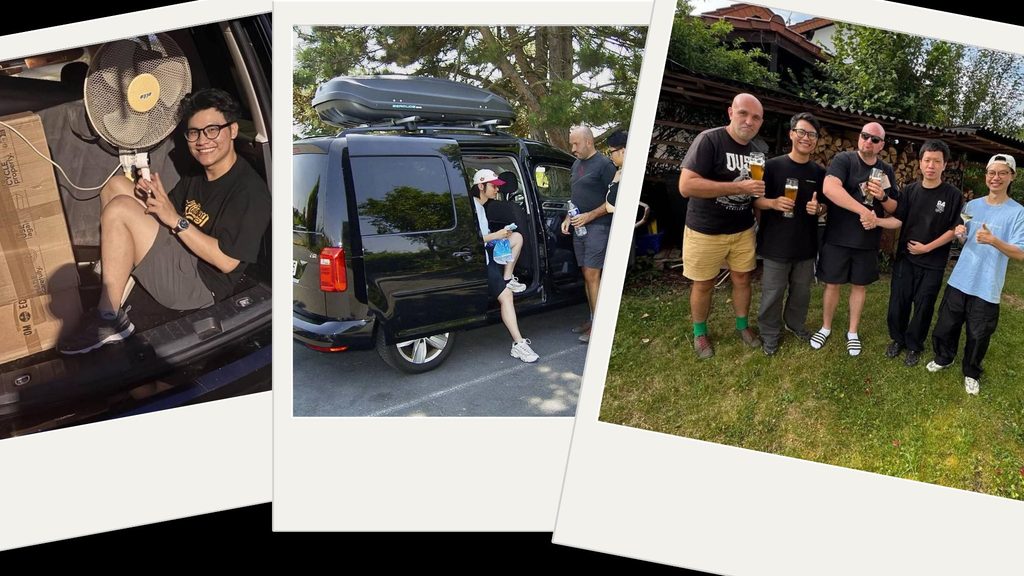
Quang: Yes, the whole trip, except the very beginning.
Sergey: We have a friend Jan from Sankt Wendel, Germany. He lived in Hanoi and we even played in a band together, called Bongwakers. I was randomly messaging him and told about the tour, so he got super excited, and he offered to drive us, even for the whole tour.
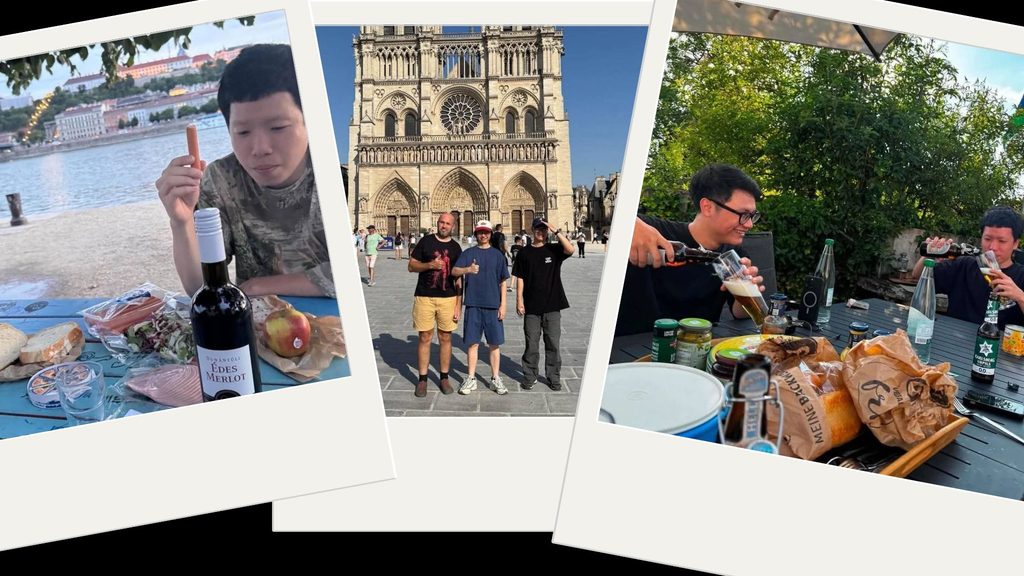
But in the end he could only drive for about a week or so. We met in Brussels and drove through Paris all the way to Sankt Wendel where we stayed at his family’s place. We also checked out his garage full of bikes and beers and had a really good BBQ together!!
Then we did another show in Trier, which is just an hour drive from Sankt Wendel and finally parted ways with Jan and rented our own car from there.
E: Europe is kind of a blessing and a curse. Here in Asia you have to fly wherever you go, more or less. Over there you can tour by car, but from my own experience it’s taxing. How was that for you?
Quang: I enjoyed it!
E: Oh really?
Quang: Yeah. The boys let me sleep (hahaha). I had enough sleep, so the next day we just hit the road and I enjoyed it. It was quite tiring, but I just knew I had to drive and we had to make it to the next city. And we need to finish the set and go back to sleep.
Nguyên: For the first part of the tour we had Sergey sit with Quang, because logistics-wise you shouldn’t squeeze Sergey in the back (hahaha). But later on, Quang needed a co-pilot to keep him entertained on the road. So I was doing all sorts of tricks – curating the music, making a conversation, helping him with the directions and stuff.
Slowly, during the leg where we had to drive ourselves, we figured out a system. Every morning it’s the same routine. Vui Qá goes to have a shit and then Sergey has his coffee and THEN he goes to shit (hahaha). Then we pack the car. We had a specific system to load everything in and out, and it just became a routine we stuck to until the end.
E: I saw you didn’t have a van. It was a bigger family car, right? For the next time, are you going to do anything differently?
Quang: Bigger car! Just a bigger car.
Sergey: Quang said, the reason we rented this kind of car was that the nearest rental office was in a small town, so they just didn’t have a good selection.
Cigarette Rations and Learning Your Limits
E: Did you have any drama between yourselves? I know how messed up it can get when you spend so much time with the same people, especially in a car, and in a band, where everyone has their own personality and needs.
Quang: There was one time Vui Qá was really grumpy and he was trashing Sergey’s suitcase and the stuff inside. And then at the end of the tour, in Berlin, when we were all so fucking drunk, Sergey was crying like: “Why woooould heeee doooooo thaaaaaaat?” (hahaha). You remember?
Sergey: No! (Everyone laughs)
Vui Qá: The thing with me is only about cigarettes. If I don’t have cigarettes after I wake up, it turns me into a different person. For real. I was out of them in Berlin, but it was okay because I bought rolling tobacco.
Nguyên: I learned from the previous tour, when we were playing Baybeats and then China. One morning I stayed up drinking until 5 AM and we had to leave at 7 AM. I didn’t get enough sleep, I was hungover and we had to walk to the bus stop for 30 minutes. That was my grumpy moment, and I was thrashing and doing all that stuff too. But I very quickly realized that’s not the way to go.
So on this tour in Europe I was extra careful to remember to feed myself. I actually eat the most out of everyone in the band, because I know that if I don’t have enough food or enough sleep I turn grumpy. I don’t smoke, but I do get grumpy when I’m hungry, so I always try to stuff myself with food.
I think Quang, Sergey and I kind of learned our limits. And Vui Qá too, to some extent. That’s why he bought a carton of cigarettes for each of us to carry for him into the Schengen zone (hahaha).
Vui Qá: And I managed how many cigarettes I smoke per day, evening and morning. Calculated every cigarette (hahaha).
Nguyên: It’s a really fun and interesting thing on tour, figuring out each other’s limits and our own limitations as well, and trying to stay out of each other’s way so we don’t trouble the other guys. That was the main takeaway. We kept the tour relatively drama-free except for that one incident. The rest of the tour was so chill. We slowly started working together like a well-oiled machine.
E: I assume you didn’t party that much while on tour?
CL: No, not really. But after the last show we partied hard!
Nguyên: It was so funny. It was the first time all of us saw Quang that drunk. He was soooooo fucking drunk (hahaha).

Booked Through Metal Archives
E:. Can you tell us how you even landed this tour? How did you get this opportunity?
Sergey: There is a promoter in Paris called Sanit Mils, the person who runs it, his name is Vangelis, emailed us. We get these kinds of emails once in a while. He asked if we wanted to play in Paris and I said it would be cool, but we would probably need a bigger tour, not just Paris. So he was kind enough to connect us with Ben from Dead Pig Entertainment.
Ben asked us what kind of tour we have in mind, and I also asked him back a couple of questions – like, should we rent a car, should we rent a backline, how do we handle visas and stuff.
He explained whatever he could and asked if we’d be happy with seven dates. I said: “Yeah, let’s try seven dates.” Pretty much the next day he emailed me saying he had already booked seven dates for us. And one of them was Obscene Extreme. So he had Obscene Extreme on board pretty much the next day.
E: So, he has connections with the festival, or?
Sergey: His job is booking bands in Europe, so he has connections with promoters around Europe in general, and with festivals too. Then he asked if we wanted to do 14 days, we said yes, and a week later he had booked 14 days too. So we said that we could do even longer.
Eventually, he said that it was pretty much booked. We had everything semi-confirmed around October or November last year. And then, around February or March we just did some final changes to the route and started our final preparations with visas, merch etc.
E: How did Vangelis even come across you guys? Did he stumble upon your page online?
CL: He found us on Metal Archives actually! (hahaha)
Nguyên: At the time Vangelis was planning to go to Hanoi for holidays and was looking up what the scene was like there. On Metal Archives we were still listed as a Hanoi band, so he contacted us through it, and we had to explain that we’re actually in Saigon now. Back then I was still in Hanoi, so I met him and Hiếu (House Of Ygra) and we had a nice chat about everything. It was kind of cool. Cool dude, really nice.
Hanoi Band VS Saigon Band
E: This is a perfect segue then. You guys started as a Hanoi band and then slowly all of you migrated from the north to the south. How different is it for you, going from a Hanoian band to definitely a Saigonese band? The difference in how things operate in the North and here, the amount of opportunities you have.
Sergey: That’s Nguyên’s favourite subject! (Everyone laughs)
E (to Nguyên): Yeah, you can go.
Nguyên: What was the question again? (Everyone laughs)
E: What is the difference between the two scenes, how things are organized and done?
Nguyên: I think for us it stayed the same. To me personally, I’ve always seen Cút Lộn as a band that is well received by the community, but we’re not that community-driven. We don’t go out and hang out like: “Yo, I’m in this band, I’m this and that.”
E: Are you sure? Vui Qá is everywhere! Drum and bass, techno, hip-hop…
Vui Qá: Because I’m from Saigon! Saigon has different scenes and Hanoi has no scene. Everything’s in Saigon.
E: Mic drop! Hot takes!
Nguyên: In Hanoi, most of the time we play a show, hang out a little bit, then go home, and we only see other people at shows. In Saigon people actually go out and hang out whether there’s a show on or not. In Hanoi a lot of people still do, but personally I don’t.
So I think we in Cút Lộn are not the kind of people who hang out with the local community THAT much outside the context of playing shows. To me, I don’t really feel a difference since we moved from Hanoi to Saigon.
E: It feels to me that you’re one of the few bands in the whole country where, even if you played once a week, the people would still show up, no matter how often you play. What is the secret?
Vui Qá: The secret is having promoters in the band. (Everyone laughs)
I worked at 84badblood, Sergey hosts shows with Bomb (Out The Run), Nguyên is also doing promoter stuff for some indie music festivals and shows, and Quang used to do promotion in the Hanoi hardcore scene.
E: So you think that’s the only reason why you always get people to come out? Because you’ve been involved in promotion as well?
Vui Qá: Yeah, I think that’s how the scene works. If Sergey is not hosting anything, it’s gonna be 84badblood or some others too. We played a lot of indie shows too, thanks to Nguyên.
Quang: We play a lot, we do lots of shows. I think we are one of the most active bands in the scene. We try to play well. We know we don’t play very well. (hahaha)
After every show we often joke about it: “Oh, this part I fucked up, that part you fucked up.” But overall, we saw all these amazing bands with amazing musicality, so we try to aim for that, no matter what genre we play. Now we play hardcore, maybe in a few years we’ll play grindcore… or we play math rock. But we try to play it well.
Vui Qá: When we write songs, one of the things that helps us play many shows is that we try not to bind ourselves to any specific genre. We use a lot of elements from other shit too, so we can fit a lot of shows. Quang is very metal and he always rejects anything that’s too typical or generic for any genre. So he combines a lot of elements. Sometimes it’s screamo or emoviolence, sometimes it’s something fast like grindcore, or just hardcore. I think that’s also part of the answer to your question.
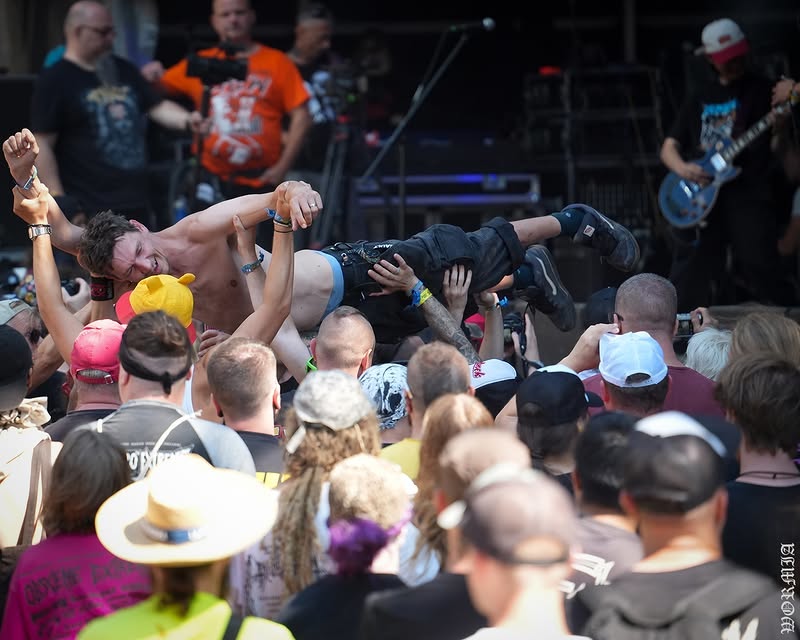
Leaving the Pikachu Era Behind and Hearing the Mix Before the Riff
E: You already made a major shift. I’ve known about your band more or less since you started, because that was close to when I moved to Vietnam. You went from this, I don’t want to sound offensive, silly approach, with the masks and the different outfits on stage for different releases. It was more of a gimmick, and that’s how people got to know you. And the lyrics were more relaxed than they are now and easier to follow, even for me as a non-Vietnamese speaker. About beer, friends, hanging out.
Then the last two albums took a major turn into a very dark corner. The lyrics are more abstract and more visceral. How did this change come about? Was it planned? Did you feel you needed to be more “serious” to be perceived differently than just a Pikachu band? I know your musical skills and talent, but was that a hurdle?
CL: There are so many questions in this question (hahaha).
Quang: Not many people know or remember this changing period when we went from crossover to hardcore punk. During that gap year we threw away a whole album worth of songs.
In the beginning we played crossover thrash, and then with Lê Minh on vocals we started to write even “thrasher”. Everything faster, moving more into speed thrash. And at some point it became so tiring for me. I wasn’t enjoying playing it anymore with all that speed. Me and Sergey also listen to lots of other genres, so at one point we decided to do something different.
In terms of technique, the difficulty in a thrash metal band is speed. Then we moved into progressive stuff, so the difficulty became the rhythm, the sync between the drummer and the guitar, all these odd beats and odd time signatures. We enjoyed it and were curious about all of that. That’s one of the main reasons we decided to do something different.
E: How about the subjects? ‘Cause at the time you also changed the lead singer, so (to Vui Qá) I assume you wrote most of the lyrics?
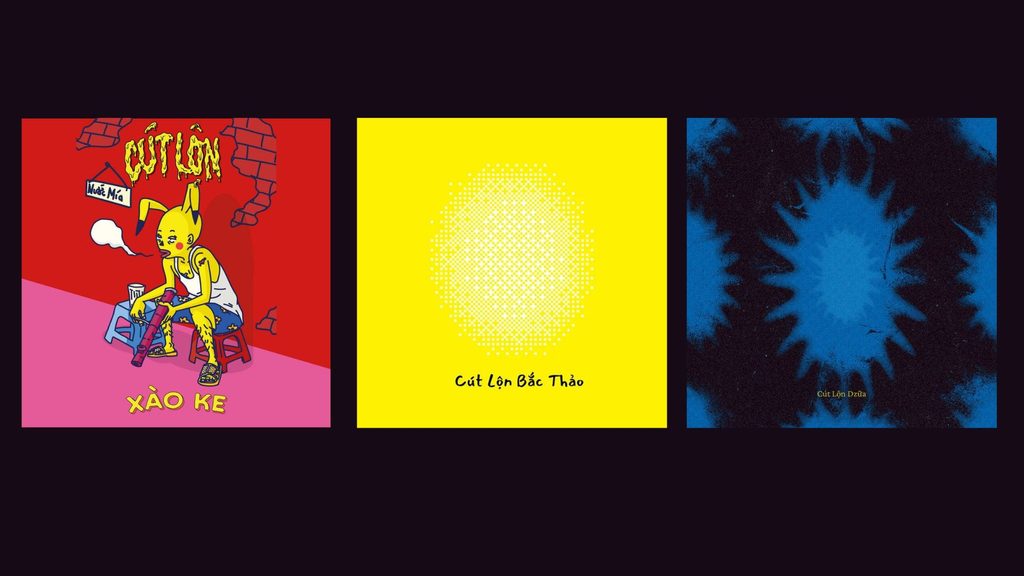
Vui Qá: For the “Bắc Thảo” album, I still remember when I tried to write after I joined. Me, Quang and Nguyên were writing the lyrics together, because I didn’t want to switch completely from the old Pikachu style to the new style. I still wanted to preserve what was Cút Lộn back then.
But after a few songs I couldn’t keep writing lyrics in that funny way. So “Bắc Thảo” is something very new and abstract. For “Bắc Thảo” – some songs we wrote together, some songs I wrote completely myself. And on “Dzữa” it’s just me.
E (to Vui Qá): When you write the lyrics now… On “Bắc Thảo” you were adapting, you were the new guy. For “Dzữa”, did you already have written material that you started laying over the tracks they wrote? Or did you first do the melodies, your verses, just “la la la”, and then write the lyrics after?
Vui Qá: It’s both. Sometimes it’s the rhythm I need to put into the song, but I already have some words. So it’s about cutting down the words. Most of the time I write a lot. Some of it works, some doesn’t. With the newer stuff, the vocals should be short but effective and efficient, so most of the time I’m cutting it down.
E: What is your main inspiration for this?
Vui Qá: When I was writing lyrics I realized that Vietnamese poems and writing are very romantic and sentimental, always very bright, beautiful words. But there’s nothing about something chaotic, nothing on how to describe something so people read it and feel chaos. It’s kind of hard to do. So my goal back then was to capture chaos with words that are a bit poetic and lyrical.
And the subjects of the songs are about things happening around us, but the bigger things. Me and Quang also do art, we’re designers, and as designers or artists we try not to be too obvious. We always try to capture the bigger things. Because of that I can’t write in the old Pikachu style. It’s very funny and cheesy.
Sergey: As for the process, we always write the music first. While we’re writing, Vui Qá already has some ideas of what the song could be about. Then, before we finalize the lyrics, we usually work together on the vocal line / melody. We all listen to how it will sound, and then the wording is totally up to him.
E (to Quang): And you’re in charge of most of the technical parts? You do the recording, mixing and mastering of your stuff. Is that a good thing or a bad thing, or can it be both?
From your own perspective, do you find yourself beating yourself up, like “I should have done this part differently”? Whether it’s the guitar playing or the production. Is it harder or easier?
Quang: For me, and I think for everyone, it’s easier. Even in my job I’m very… how can I say…
Vui Qá: Very bossy!! (Everyone laughs)
Quang: I have to do it my way. I have some inspiration for the sound, the style, how the band is going to sound, how the guitar will sound, how I’m going to blend all the songs together, how Sergey’s drums will be tuned.
E: So you basically already hear the final product before you start writing riffs? You already know how the mix is going to fit?
Quang: Yeah. To a very detailed point, like how Nguyên’s bass is going to be chopped into how many tracks. Very technical. So I think it’s easier for us that I do it, rather than having to explain all this to someone else.
E: Do you think you’ll stick to this in the future, or is there a person you have in mind who would be a good producer for you?
Quang: No, I’m happy with it.
Sergey: I think the problem with bands who use third-party mixing and mastering is that it’s not really your band anymore, in a way. It’s good to work with different people if you’re sure you have a very good mutual understanding, but most of the time that’s not the case.
Most of the time if you pay somebody to do that job, they just do it as a paid job. They’ll do their standard stuff. So your album might end up sounding like any other album mixed by that guy. Which is not necessarily a bad thing, but we’re happy that Quang has all these skills.
E (to Quang): Would you at any point share your load?
Quang: Oh, we all DO share! From the production perspective, everybody records their own things. For example, Sergey records and does the editing himself. Nguyên also edits the vocal tracks for Vui Qá. When everything comes to me, it’s already there. I don’t have to do much editing.
Nguyên: I think the heaviest lifting in production is recording, and we’re kind of self-sufficient there. Sergey can record the drums with the help of Bomb, and he edits because he knows which parts need to be edited tightly and which to leave natural. I also record and edit bass myself.
So when it gets to Quang, it’s pretty much 80% finished. The image of the whole band is already there. So mixing should be much more pleasant, not a painful process where you have to do tons of fixing in the mix, because it’s pretty much fixed in the edits already.
E: So you do basically all of it digitally, at home. Quang, you use plugins for your guitars, not a live amp?
Quang: I don’t use a live amp. I used to do it for our first album “Xào Ke”, I reamped it. It was pretty analog, but it also had issues. And here I don’t have the space to crank the amp either.
Sergey: He has many amps though. (hahaha)
E: That was my next question, because someone told me that you got a pretty sweet Orange amp recently.
Quang: Yeah. I just like holding it.
Sergey: It’s furniture. (hahaha)
Nguyên: It’s just decoration, yeah bro. (hahaha)
Vui Qá: Stacked on each other they fit the shelf next to it, and the color matches the furniture.
Nguyên: It’s just a cup holder. (hahaha)
Two Color-Blind Designers and an Egg
E: All right. Does this spill over to the artwork as well, since you do the artwork for your albums? Do you have a vision for the artwork when you’re thinking about the concept of the album?
Quang: No, not at all.
E: ‘Cause your last two artworks, similarly to your lyrics, are very abstract looking. It’s not like a tree with a building in the background and a guy crying or whatever. It’s basically just… COLORS. So how did this come to mind?
Quang: I don’t know… I’m color blind, he’s also color blind (pointing at Vui Qá).
E: What?!
Vui Qá: We’re both designers, and we’re both color blind.
E: How do you do your shit then?! And all your t-shirts are like red and yellow and other bright colors too!!
Vui Qá: Being color blind doesn’t mean you mix up all the colors. For me it’s the red and green tones. I can only see 50% of them. In specific light conditions I can mix them up. Right now I can see this fucking bright green and I know it’s grass.
Quang: It’s ORANGE!! Fucking yellow, bro. (Hahaha)
Vui Qá: But at noon, when the sun is really bright and the sunlight hits the green, it becomes yellowish and I can’t really tell if it’s green or yellow anymore. But because we learned that leaves are green, it’s green (hahaha).
E (to Vui Qá): So for you it’s more about tones. And it’s the same for you, Quang? So it’s not like you just see black and white, black and gray.
Quang: We see the world differently. We’re both a little bit blind to red and green. Less red and less green, so we can’t see magenta, violet, lilac or lavender.
Vui Qá: For me it’s mint, the pastel tones. I can’t see shit. Just gray.
E: Wow! Okay. It’s very interesting because you both do visual jobs!
Vui Qá: But in general, we don’t have any visual or musical concept in mind when we start writing. We just do songs after songs and eventually we figure out how the whole album should be.
When we started writing for “Bắc Thảo”, it was blank, but closer to its completion we all figured out that it should look and feel abstract and that’s where the cover art comes from too.
Quang: Yeah, an abstract doesn’t have to be in any form or shape. Or if there’s a shape, it’s gonna be an egg shape. (Everyone laughs)
More Than Three Songs, Plus a Looper
E: “Bắc Thảo” and “Dzữa” came in a very short period of time. Not even a year. Do you already have new material for the next one?
Sergey: We started writing this week.
E: Knowing your pace, it’s going to be soon. When do you plan to release?
Sergey: We hope to release something before the tour.
E: Are you going for a full album again, or something shorter this time?
CL: Definitely more than three songs! (Everyone laughs)
Sergey: There’s a lot of bands like: “We’re going to release an EP!” And then they do two singles and the actual EP is fucking three songs. What the fuck, bro (hahaha).
E: I agree. So do you think you’ll be in similar waters this time, or are you going math rock? (hahaha)
Quang: We don’t know yet. But every time we write, every session, when we start writing a few riffs, Sergey always says: “We should not be too serious.” We shouldn’t go too dark, too serious, or too genre-specific. So we don’t know. We’ll see.
Ah, and on this album we’re experimenting with a looper!
Nguyên: Yeah, we’re doing layering. It’s something we discovered in our first session. Sergey touched on this already. We don’t use backing tracks or anything, so at the end of the day it’s still four dudes with their own instruments. But we’re trying to make it bigger and bring a lot of studio techniques into the live show, and one of them is layering guitar lines.
One of the things we’re curious about is how Quang is going to adapt to looping on stage at certain parts. That goes into the composition as well. You have to play this part first, loop it, then play the next thing, and somehow keep the composition cohesive and interesting to listen to. That’s something we’re very excited about.
Quang: I’m going to be tap dancing a lot (hahaha).
Nguyên: There are also tons of textures you can do with that kind of looping. You can have a very chaotic atmosphere, guitar noise, and then some heavy riffage on top. It’s something we’re very excited to try on this new material.
Vui Qá: I think my role in the band is… Sergey and Quang are very technical, writing technical, very mathy parts. My role is: “Yo guys, this part needs to be for people to mosh.” Otherwise it’s just riffs and riffs and technical parts with no place for MOSHHH!! So sometimes I say: “Yo, we need it simpler, for the mosh.”
E: Alright, alright! Crowd-pleasing!!
Sergey: The scene guy. (Everyone laughs)
Vui Qá: I’m a scene guy, you know what I mean. In Saigon I’ve been in the scene since like 2013!
E: All right, what are the plans for you guys? Besides writing music, is anything else scheduled? You’re planning the next tour for next summer, but do you have anything else?
CL: Not really. We don’t have anything booked before the tour yet. Ah, except that Josh asked us to support the Total Chaos gig in December. We’ll probably play some more though, at least in Saigon.
Is the Scene Dead or Just Shifting?
E: Alright! We can close on this. One last question – what’s going in with the fucking scene now? Out The Run is on a break, you have two shows coming this month and November, right?
Sergey: Ah, no. November one was also cancelled. We’ve had many bookings but all the bands cancelled, mostly for financial reasons. Like, they couldn’t find enough money to tour. Or there was that one band from Mexico that was supposed to play in November but they also had to cancel. They were hoping to get their government to fund the whole tour but didn’t manage to do it in time.
Quang: We need to find Quân.
Vui Qá: I called his mom twice this week.
Nguyên: But I think people are still doing shows at smaller scales and…
Vui Qá: That’s not a scene. That’s just some shows…
Nguyên: They’re going to be the scene! If no one in the scene is currently doing anything they’re going to be the scene. So I think it just keeps coming. We had the same problem in Hanoi when Hanoi Rock City closed. People were like, oh, the scene is dead. No shows. Blah, blah, blah.
No, people are still doing it. Like you just don’t know about them because your idea of the scene is your specific 10-20 people. But the scene is always evolving. New people coming in, trying new shit, stirring up dramas, this and that. And then that’s how things evolved. Like people who actually want to do shows and promote things that they care about. They will stick around and do stuff.
For example, with 84badblood, right? He hosted a lot of shows, lots of them were a total loss on the financial side. But if it’s just a random kid then they would just quit after one show, right? But he stuck around, he kept doing it.
Sergey: He quit after 10 shows. (Everyone laughs)
Nguyên: So that’s a record! So I imagine the kids nowadays, like the people who are not considered to be in the scene yet, they’re having the same thing. And they would figure it out or they would just die. But the point is, there’s still things happening. It’s just not on the scale and the level that we’re expecting them to be. And it’s a cool thing with the whole economy.
E: But there’s a thing. Like, for me, I don’t think it’s a problem. I think, at this moment, maybe there’s too many people organizing shows. For me the problem is people coming or better said NOT coming to any of the shows. And then it seems like it’s not synced between the expectations of three parties involved – the promoter, the band and the crowd. It seems like everyone has their own vision of how it should be.
Nguyên: I would say according to my experience in Hanoi, I don’t know if it’s going to be the case in Saigon. But eventually it will converge. Eventually someone’s got to rethink the whole thing that they are doing. Like the whole situation we have right now like: “Oh, this is bullshit, we’re not going anywhere with this.” And then something’s going to change from it – for the better or the worse, we don’t know yet, until it unfolds. But I have a strong belief that it will converge at some point.
That’s just my personal belief according to my experience in Hanoi. ‘Cause we had that period where everyone’s trying to do their own shit. Like they try to triple book HRC on the same day. That kind of stuff. But then eventually, only one or two survivors kept doing shows. And they learned to either work together or stay out of each other’s way. But the point is that it needs time for everyone just to kind of pick it up.
Vui Qá: The scene is also about the ecosystem around it. In Vietnam it all only started around 2010. Compared to other countries in Asia where hardcore and punk started from the 80s. It takes time to build the ecosystem with venues, promoters, and the ways people connect to each other… It’s still a small scene here. But it’s very active and free. I love it!
In many other countries, different scenes are separated from each other. Here we have techno ravers come to hardcore shows and lots of hardcore kids going to see other music styles too.
E: Okay. I hope you guys are right. Is there anything you would like to add? Say hi to mom or something?
Vui Qá: I think Vietnamese bands should play abroad more often. Like, Elbowdrop. After they played in Malaysia. It was very like… eye opening for Quân. That’s where he started the Bad Blood from and everything else came after that.
E: Yeah, but you need to work. Like, that’s also a problem. It doesn’t matter if there’s 100 bands in the city, if none of them are doing shit. Like, I think you are one of few bands that actually walks the talk. Everyone else wants to be part of the scene and talk about it, but no one is actually putting in the hours. And you guys definitely do.
Quang: Money often is the problem.
E: Okay. I understand. I understand. It is a big factor, of course. Of course. Been there. But I think…
Sergey: On the other hand, though… I had this conversation multiple times – when someone is asking me to book their band. And I would say, like, we cannot book you for that show because you don’t fit the lineup or like, you know, it’s just not the right time. Whatever. I only have limited slots anyway.
And I would say, you guys should just, like, run your own show or something. It’s easy. And then they’re like: “We don’t have money.”
The point is, I don’t really need any money to do a local show. Literally, I need zero money. Like, even if you hire a sound engineer, they’ll charge something, but you definitely will get that money back from the tickets anyway. It’s not much. And the venues are easy to book too.
E: Yep. I agree. Money can be a problem, but I don’t think it’s really a problem. I think it’s just one of the excuses people use to not actually do.
Nguyên: I do agree with Vui Qá in the sense where I think more bands should go out. And see the regional scenes. Like, you don’t have to go to Europe, but, like, too some…
E: Yeah, but that’s really where money plays a major role.
Nguyên: Yeah, so, like, it’s a privilege. It is a privilege. But in a sense where you can instantly tell the difference between a band who’s been playing outside the country, like, outside of Saigon…
Like, you don’t have to play in Bangkok or Malaysia. You just try and play a show in Hanoi. It’s already different. And it’ll help you see the bands outside of your local circle and bring your music so much further than just, like, a cultural activity that you do with your boys.
E: Exactly. And that’s why I said that not a lot of people walk the talk. Because if you really want to do it, and if money is the problem. Okay, what can you do about it? Can you work harder? Can you not smoke cigarettes for two months, or not drink for a while to save money for this? (Everyone laughs)
So, it’s a priority kind of thing. It’s like, do you really want to do this, or, like, you don’t want to do it?
Sergey: I would say, with Cút Lộn, we never got paid in any of the Asian tours. Like, ever. The only decent money we got was from the Baybeats Festival, that’s it. And we tour a lot, like, even from the “Xào Ke” era.
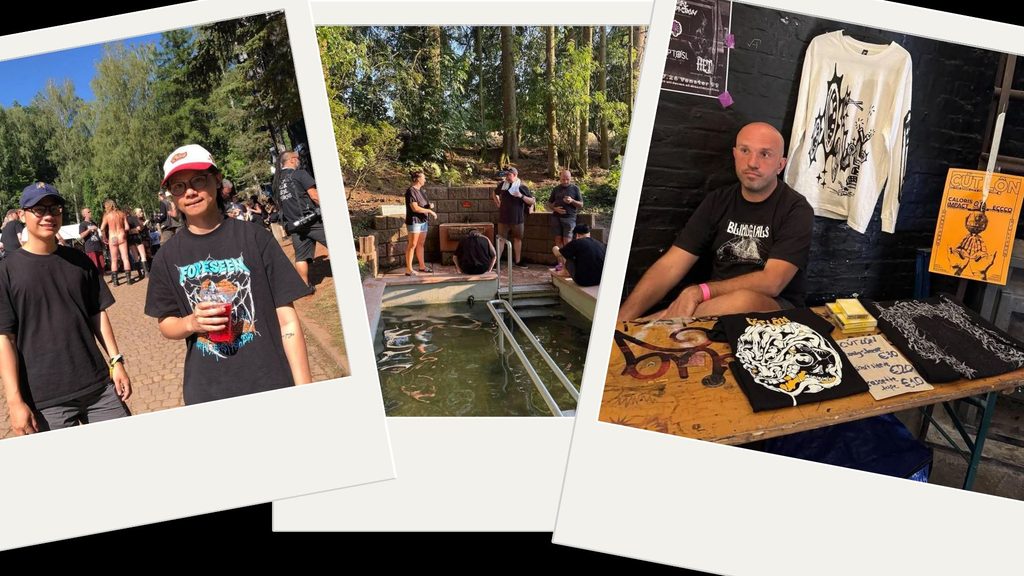
So the way we can do it is we just do a lot of merch. And thanks to that we never got into any big minus. Even if some tours require huge upfront payments like what we did in China or Europe, we still always get it all back with the merch.
E: Exactly, and if Vietnam is good for anything, it’s fucking merch! Like, the textile industry is huge here. It’s cheap to produce and you can get really good quality. Sell it on the show, get some money back. I mean, and do shows!
I think people are just a bit lazy. I do these bi-weekly shows at Umbala now and the number of bands whose first question is, like, how much are you going to pay us for the show? (Everyone laughs)
It’s confusing, like, of course, I also play, I’ve not been paid for years. Of course, you want to get some money because you put money into the rehearsing and everything, but, like, you don’t have a single release. You didn’t put any music out, or your last music was released over a year ago, and you have played two shows since. How can this be the first question you ask me, like, how much are you going to pay? And then, if I say it’s a split, like, among 3 bands, whatever, the tickets sold, that’s what you’re getting. “Oh, but we need this. This is our minimum.” (Everyone laughs)
Vui Qá: I would say, the Vietnamese music industry and the music scene is very funny. Because my background is in the underground, punk shows, hardcore. So, we’re on stage because we have things to share. But the rest of the music scenes are based on, you know, like commercial shit.
And there’s not so many examples for new bands. Like, they see a band becoming famous and they think like, oh, I really can be like this and stuff. But underground music is not about competition, it’s different.
Nguyên: That’s actually a very interesting point. It never occurred to me that some people just, like, they have the ignorance approaching, like, doing bands and stuff. Like, I never factor that in.
E: But it’s more common than you think.
Vui Qá: Come help Bomb carry the amps!
E: That’s what Bomb also said when we did the Kinh interview. Like, if you don’t really have money and you’re eager to see the band, just send me a text. Um, work for the day. Like, help me, the load in and load out, be around, help with the cables. It’s all good. Like, you see your show. You are part of the community and you didn’t spend any money. Maybe you’ll even make some money. Like, I’ll pay for your day.
Vui Qá: For the scenes, for hardcore – It’s about the community. And DIY. It’s the core.
When I first came to other countries with Cút Lộn. Like Thailand or Malaysia. I see friends in the scene helping each other and doing DIY things and shit. And everyone is very down to earth. So, I felt it’s the right thing to do. Being in their community, I can sense it.
But Vietnam is kinda… the community values are not really big here yet. It’s just like bands playing with bands.
E: So you’ve got inspired to do that shit here. To level it up, to become a president of the DIY of Vietnam. (Everyone laughs)
Vui Qá: I was like: “We can feel it, and we want to do something about it.” Like, I met the guys from Empathize and happyco. They were saying: “Oh, you’ve been around the world now. You’re a rockstar!”
And I’m like: “Oh, shit. You have to hear my story about vegan food.” (Everyone laughs)
You know, like, sitting on the pavement, eating food from LIDL. It’s not really like a rockstar. There’s no rockstar. I said it, like, you guys play hardcore. There’s no rockstars in it. It’s like, you know, just be down to earth. So, yeah.
E: If you really think you’re going to be a rockstar, nowadays, like, just give up, leave your guitar, go do something else. OnlyFans. More money. (Hahaha)
Congrats! You’ve made it here!
Hope you’ve enjoyed the trip along with Cút Lộn. If this is your first time hearing about the band, be sure to check out their music and catch them live whenever you can. Stay tuned, as Ethos Collective will be the first there to share any of their new work and potentially do a follow-up next year after their second EU trip.
All photos courtesy of the band and Wormia