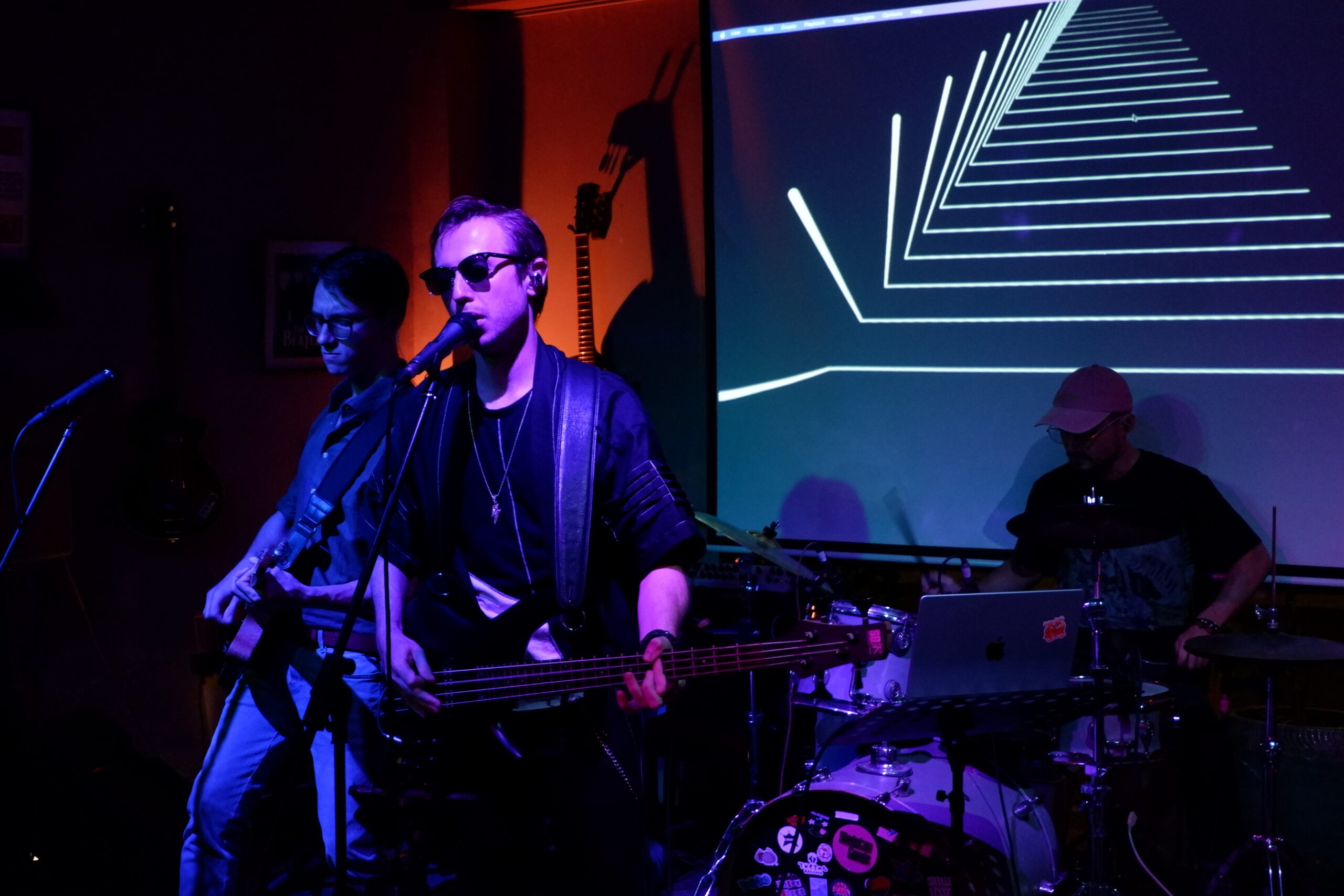
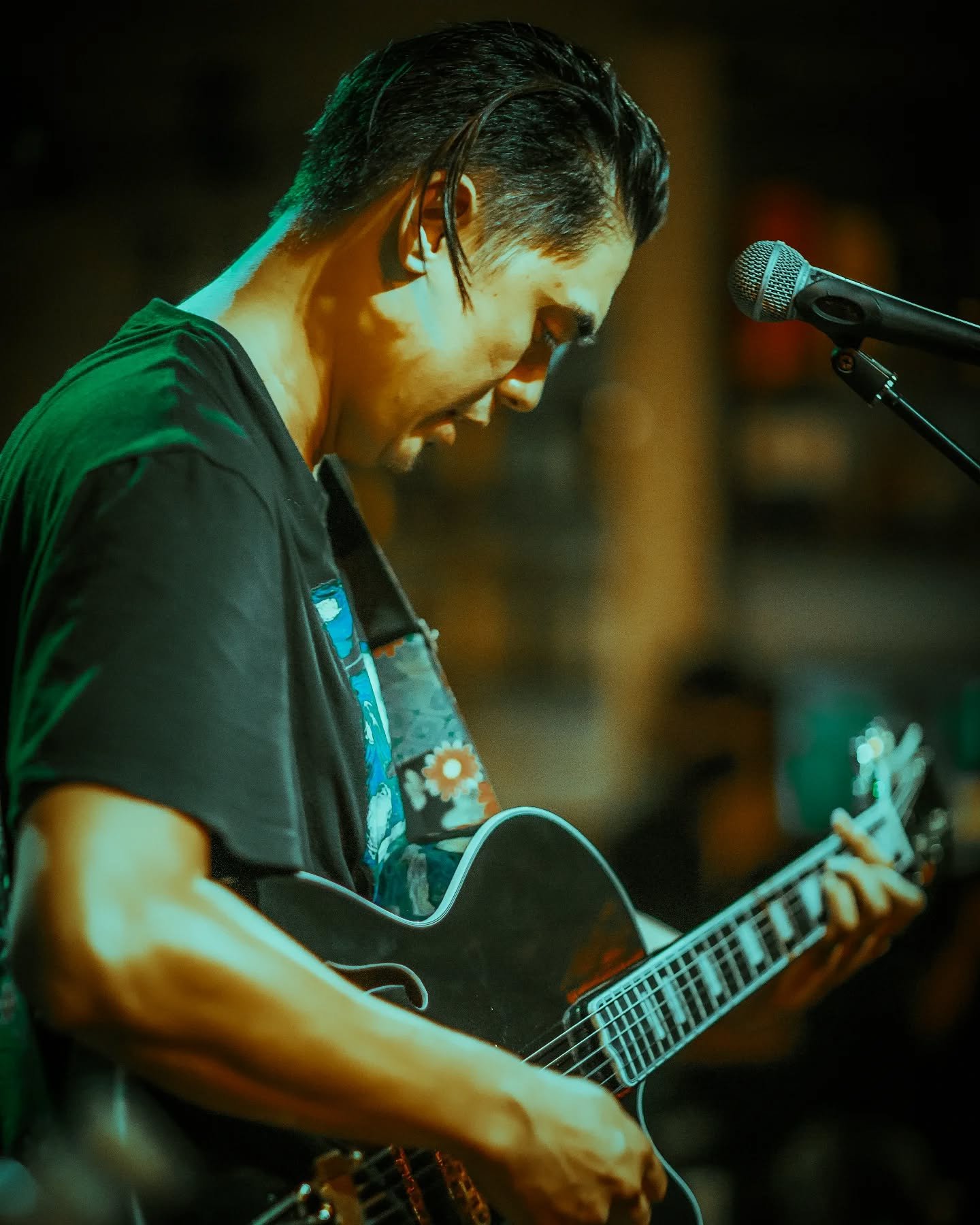
Từ những dòng code đến các hợp âm, từ im lặng đến những giai điệu chất chứa tâm hồn,XOI không chỉ là một ban nhạc. Đó là phần mở rộng đầy cảm xúc của Cường, a programmer by trade and musician by calling. Blending deep lyrical introspection with gritty production and a post-punk edge, XOI’s music is shaped by loss, love, and the eternal tug-of-war between artistic truth and everyday survival. In this candid conversation, we explore Cường’s journey through grief, fatherhood, self-taught artistry, and the many masks we wear to stay afloat. His story is one of quiet resilience, an honest testament to growth, creativity, and the long game of being seen.
Ethos:
Hãy kể mốt tí về bạn được không? Bạn là ai?
XOI:
So I guess my name is a good start. I’m Cường. I’m working in software development and music media. Those are my main occupations and my strong suits. Yeah, I’m 34 years old.
E:
Bạn đến với âm nhạc như thế nào? Nó đã len lõi vào cuộc sống của bạn ra sao?
X:
Tôi nghĩ sự kiện lớn nhất là việc tôi chơi band hồi cấp 3, mặc dù lời giới thiệu sớm nhất đến âm nhạc là nhờ một người anh trai hơn tôi 10 tuổi. Tôi nhớ lúc đó anh ấy chơi vài bài của Dream Theater và Skid Row I think. But I just listened to it then, I didn’t play. Then, when I was in high school, my neighbor was forming a band and he figured out that we liked the same music, so he asked me to join his band. He asked me to play the bass because I could play some guitar. But, but when he asked, I was like, “How about drums?” He introduced me to the church he was attending, as they had music classes. I’m not religious, actually, but it was a good opportunity to learn. The church was teaching musical instruments and I used the chance to learn drums. We played for some time, but we just didn’t make it work.
E:
Giờ cho tôi hỏi về người anh truyền cảm hứng cho bạn một tí được không? Bạn có nhắc rằng anh ấy hơn bạn mười tuổi. Ngoài ra còn anh chị em nào khác có ảnh hưởng đến bạn theo cách tương tự không?
X:
I have two older brothers and one older sister. I’m the youngest one, you know. But only that one brother that I mentioned is the one who influenced me the most. You see, he passed away.
E: Ồ... rất tiếc khi nghe điều đó. Việc anh trai bạn qua đời có ảnh hưởng gì đến âm nhạc của bạn không, vì rõ ràng anh ấy là người có ảnh hưởng rất lớn đến bạn?
X:
Chắc chắn là có! Anh ấy là người đầu tiên dạy tôi chơi guitar và cũng là người đưa tôi đến với nhạc rock. Khi anh mất, tôi mới chỉ 20 tuổi – đang trong giai đoạn hình thành nhân cách – và thật sự rất khó để hiểu và vượt qua được nỗi mất mát đó. Cái chết của anh, theo tôi, là một trong những động lực chính cho công việc sáng tạo của mình. Đó cũng là lần đầu tiên tôi thực sự cảm nhận được thế nào là mất mát. Nhưng tôi cũng học được về hy vọng. Anh ấy bị bệnh, nhưng tôi luôn tin rằng anh sẽ khỏi. Tôi thật sự tin rằng anh sẽ có cơ hội thứ hai. Tất cả điều đó đã thay đổi cách tôi nhìn cuộc đời. Và nó cũng ảnh hưởng sâu sắc đến thế giới nội tâm của tôi – âm nhạc, và mọi thứ về sau.

E:
Vậy là anh trai bạn dạy bạn vài hợp âm, bạn học thử chơi trống ở nhà thờ, còn anh hàng xóm thì rủ bạn chơi bass. Vậy làm sao bạn quyết định chọn nhạc cụ nào là chính của mình?
X:
Trống là nhạc cụ đầu tiên mà tôi thực sự thích. Thú thật thì, âm nhạc không đến với tôi một cách dễ dàng, nhưng tôi có một mối liên kết tự nhiên với nó. Hồi cấp hai, có một thầy giáo dạy nhạc mang đàn organ vào lớp cho học sinh hát. Thầy chơi đoạn intro để tụi tôi có thể vào đúng nhịp mà hát tiếp. Thật lòng mà nói, lúc đó tôi chẳng biết phải làm gì cả. Nhưng tôi rất muốn chơi trống. Trong ban nhạc trước đây, tôi từng chơi trống. Sau đó, tôi chuyển sang hát và tìm được một thầy dạy thanh nhạc (Võ Anh Việt) who taught me. Not just how to use my voice, but also how to really play music. Before that, it was more of doing it for fun, but after that I started to see things very differently. I think that’s when I started to call myself a musician.
E:
Chuyện học thanh nhạc như thế nào?
X:
I started studying with him in 2012. And I didn’t know anything about singing. He just asked me to sing something, and I did, so he told me that I have a good voice. I didn’t even know about that. I really appreciate his guidance because it helped me write the songs, too.
E:
If I understand correctly, you starting XOI aligns with your vocal classes. Right?
X:
Yeah, that’s all right.
E:
Bạn bắt đầu như một dự án solo, hay đã tập hợp ban nhạc ngay từ đầu?
X:
Lúc đầu, tôi có rủ một vài người tham gia, nhưng mọi chuyện không suôn sẻ. Mãi đến năm 2015 tôi vẫn chưa tìm được đội hình ổn định. Từ thời điểm đó, trong vài năm liền, thành viên cứ đến rồi đi. Ngay cả đội hình hiện tại cũng không thực sự ổn định cho đến gần đây.
E:
Về quá trình sáng tác, có phải bạn là người viết toàn bộ bài hát để ban nhạc chơi theo, hay bạn chỉ đưa ra một cấu trúc cơ bản rồi các thành viên tự thêm phần của mình vào?
X:
Tôi nghĩ khoảng 95% là do tôi tự dàn dựng. Sau đó, các thành viên sẽ thêm một vài chi tiết và điều chỉnh khi chúng tôi tập luyện cùng nhau.
E:
Bạn thường bắt đầu sáng tác từ đâu? Bạn viết vài ý tưởng bằng lời trước hay bắt đầu từ giai điệu rồi mới thêm phần lời vào sau?
X:
It depends on the song, but mostly I write lyrics first. I think it’s not that hard for me because I can easily change it. For example, a couple of lines work from the get go, then I work on a chord progression over the next few lines, then I would change the worlds if something doesn’t match. I find that interesting.
E:
Tôi biết bạn cũng chơi piano. Bạn có sử dụng piano để sáng tác không, hay guitar thùng mới là công cụ chính khi bạn viết nhạc?
X:
Tôi chủ yếu dùng guitar thùng để sáng tác. Tôi có khoảng 2 hoặc 3 bài viết bằng piano, nhưng phần lớn vẫn là với guitar. Tôi hiểu rằng với một số người thì piano dễ dùng hơn vì âm thanh rõ ràng, dễ cảm nhận. Nhưng mà tôi không chơi piano giỏi lắm đâu (hehe), nên tôi vẫn thích dùng những gì mình quen thuộc hơn.
E:
Vì bạn thường bắt đầu với phần lời, vậy đâu là nguồn cảm hứng chính của bạn? Là những câu chuyện từ chính cuộc sống của bạn, điều bạn thấy trên đường phố, hay chỉ đơn giản là bạn muốn kể một câu chuyện không liên quan gì đến thực tế?
X:
Most of the time, I’m telling my personal stories and stories of people close to me. My brother is one of the inspirations, of course. One of his last words to me was to tell his story. So I do my best to do so. I also react to my family life and my other siblings. For example, my father never really liked what I’m doing. He was in the Army, and later he became a businessman. So, he didn’t think it was smart of me to put that much time and effort into music. He believes it doesn’t have a good future; it’s not going to put food on the table. And to some extent, I can understand him, but I couldn’t make him understand me. I’m not doing this for the money and fame, that’s not the reason and what I chase after.

E:
Nếu tôi nhớ không lầm, bạn có một ca khúc dành riêng cho cha mình, đúng không
X:
Vâng, đó là thơ của ông ấy
E:
Thế ông ấy có nói gì về nó không?
X:
He said he likes it. And that’s it.
E:
Nhưng bạn cũng đã lắng nghe ông phần nào mà. Bạn là một lập trình viên, có công việc riêng và khá thành công trong lĩnh vực ngoài âm nhạc nữa.
X:
That’s sort of correct. Programming is my work, livelihood. I work as a freelancer for some companies. But my actual “business” is XOI. I use it as a platform for all of my art-related projects, but at the moment it doesn’t really make any money (hehe). The plan is to turn it into something that can monetize and support my finances too. But I’m not in a rush.
E:
Hai lĩnh vực đó có ảnh hưởng lẫn nhau không? Công việc lập trình có mang lại cho bạn thêm động lực hay kỷ luật trong âm nhạc không?
X:
Definitely! I think there’s, the connections between them. When I’m programming, I try to make my code beautiful. Some people might think like “They don’t pay me enough for this,” but I’m just wired that way. I like to be as creative as possible. With the web apps I work on, I always try to add some animations, whatever will make it all look better for me.
E:
Bạn có tự làm hầu hết các thiết kế cho ban nhạc không? Như artwork, bài đăng trên mạng xã hội, hay các buổi chụp hình chẳng hạn.
X:
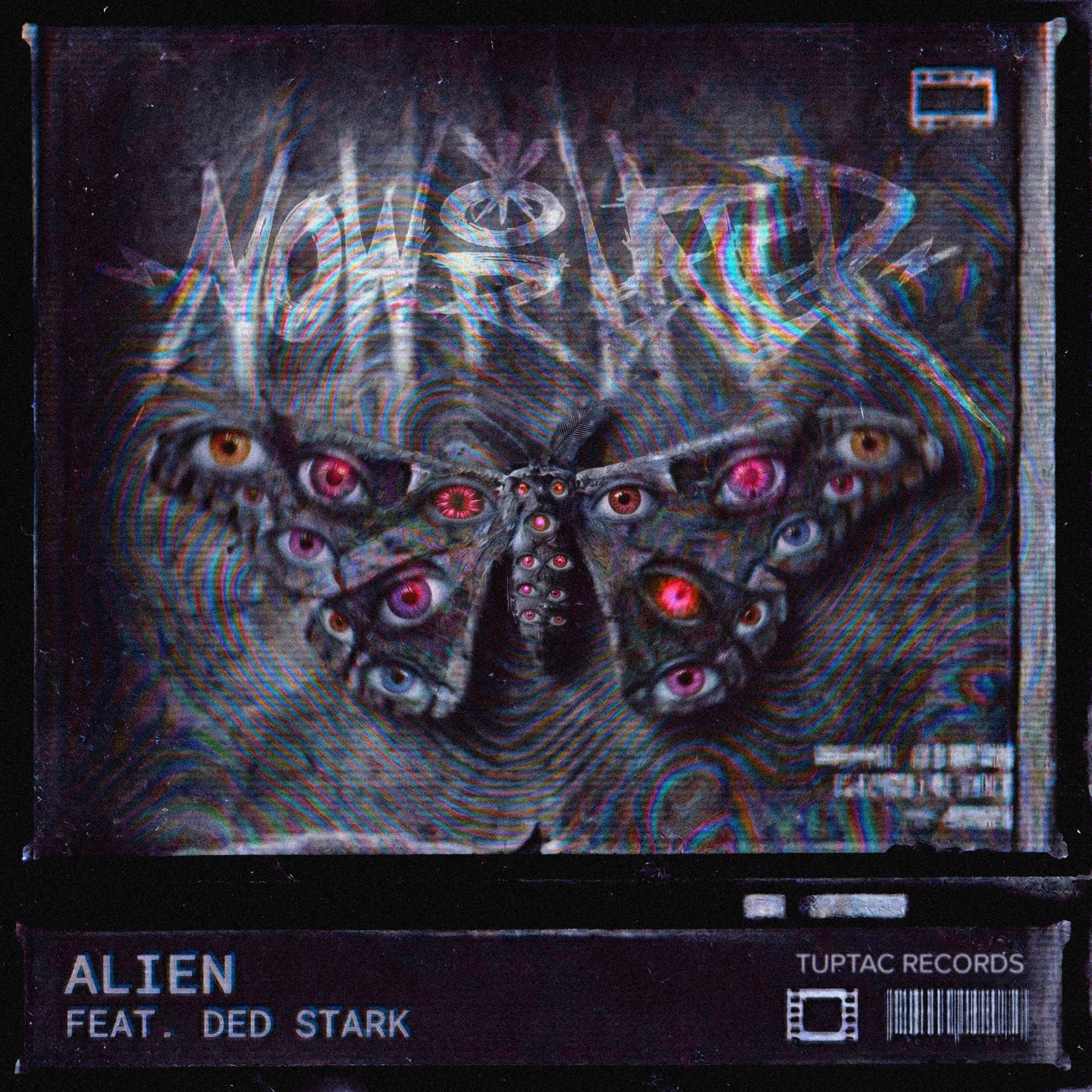
That’s correct. For example, my last release, the double album, has a theme. It’s about different personas inside me. One is like a working-class man. He just wants to have a normal life. That’s it. That’s not easy. Not here or anywhere else in the world. To have a home, work hard, have a family, and provide for them. In order to do so, some have to sacrifice some other part of themselves. And that’s not easy either. That’s where the idea for the photo came about. One puts the gun to the head of another. Like killing oneself to fully become the person who makes things work. The other side is – I have a lot of beliefs in the good things, you know, but the reality is, they’re not that simple. You cannot be too nice. I still have a wishful thinking that being nice is a good thing, someone said that – I don’t want to live in a world where being nice is a weakness – and I still think that being nice is a good trait. But on the other hand, you have to realize that it’s not going to work. So, maybe, like, you have to get rid of that idea.
E:
You’re married. You have a son. How does your immediate family react to your music?
X:
My wife has always supported me. She adapts easily to go along with me and my direction. In the ned of the day she just she just wants to have a stable life. And I do my best to keep that balance. I believe she’s the only person who really understands me. And my son likes to listen to music. Currently, mostly kid songs, but he engages with some of my songs that the more upbeat. He likes to dance a bit to them. (hehe)
E:
Việc có con trai có khiến bạn thay đổi cách tiếp cận âm nhạc không? Như bạn nói, trẻ con thường thích những bài vui nhộn, dễ nhảy theo.
X:
I don’t think so. Because, as I said before, I usually write the lyrics first.
E:
Let’s go back to the band a bit. Even though you’ve been playing on and off for ten years now, most of your releases were in the past three, four years. What’s the reason for that?
X:
Yes. Mostly because of the changes in the band. Also, my vocal coach didn’t want me to (hehe). He wanted me to fully develop my skills first. He wanted me to be perfect. At first, I wasn’t really happy about that, but honestly, I had to thank him for that “push”. I released an EP with five songs in 2018, but people didn’t seem to like it. This is a very Vietnamese thing because, if it’s not really good, people will be like, “What is this?” This was more related to the quality of the recording, to be fully honest. Maybe the idea is there, but if it doesn’t sound as expected, it’s not going to work. The guys in my previous band are not very good either (hehe), but they managed to get a good producer, build a solid fanbase, and they were one of the biggest bands in the country during their run. Also, they played softer music, which helps them attract a more churchy audience. I prefer to do my music myself fully.
E:
Bạn tự mix các album của mình à? Bạn học cách mix như thế nào vậy?
X:
Actually, I learned a little bit with my previous band (hehe). The main guy also did the mixing for that band, so I learned some techniques. I did try to hire some producers to work with me, but it’s hard for me to communicate what I want. That’s why I started to take over. Also, back in the day, I was quite against all modern editing and tone correction. It took me some 4 or 5 years to accept that it’s an industry standard and to start utilizing it in my music too. Nowadays, it’s all available online, forums, YouTube videos, you just need the right mindset to learn, so it wasn’t hard to get what I needed.
E:
Vậy điều đó có nghĩa là bạn chỉnh cao độ giọng hát (pitch correct), hay bạn sẽ sửa và thu lại cho đến khi đạt?
X:
Trước đây tôi không dùng pitch correction mà cố gắng hết sức để tự mình thể hiện tốt nhất có thể. Nhưng sau này tôi học được cách sử dụng nó sao cho âm thanh không bị giả, và bây giờ tôi chấp nhận dùng nó trong các bản thu của mình. Tất nhiên, tôi vẫn luôn cố gắng hết sức khi thu âm, và tôi không sử dụng bất kỳ hiệu ứng nào khi biểu diễn live. Tôi học cách chấp nhận những điểm chưa hoàn hảo nhỏ, và luôn cố gắng hát đúng từng nốt ở mức tốt nhất có thể.
E:
Ai là những người ảnh hưởng đến phong cách hát của bạn? Cách bạn hát khá thú vị — kiểu như post-punk hoặc dark wave, với chất giọng trầm và đầy u sầu.
Tôi nghĩ người ảnh hưởng lớn nhất đến phong cách hát của tôi là Till – giọng ca chính của Rammstein. Tôi thậm chí còn từng để kiểu tóc giống anh ấy nữa cơ (hehe). Ngoài ra còn có Tom của Blink-182, nhưng thật ra tôi lại thích ban nhạc khác của anh ấy hơn – Angels & Airwaves
E:
Các bạn có studio riêng?
X:
Yes, I have a home studio. That’s my main working space now. I go there every day, five days a week. It’s a small house with two floors, the ground floor is the studio, and upstairs I have a small office space.
E:
Theo bạn, bài hát nào phản ánh rõ nhất cá tính nghệ thuật của bạn?
X:
Tôi nghĩ đó sẽ là single đầu tiên của chúng tôi –'Mơ'nghĩa là một giấc mơ. Tôi muốn thu âm lại bài đó vào một lúc nào đó.
E:
If you’ve had the chance with famous artists, would you like to work with?
X:
Taylor Momsen from Pretty Reckless. I would like to have her voice on one or two of my songs. I would like to see how that would sound.
E:
You just released your double album – What’s the next thing for XOI? More art, collaborations, videos, something else?
X:
Currently, I’m working on promoting the album. To get more attention for the future. Also, I think I already have some songs for the next album. I haven’t written all the parts yet, but I think I’ll soon have the tracklist. I really want it to make it bigger than music. If I had enough capital, I would like to make a movie. Have a story to base it around, and then add my music to accompany it.
E:
Nếu có thể quay ngược thời gian, bạn có muốn thay đổi điều gì trong sự nghiệp âm nhạc của mình không? Và nếu có, bạn sẽ thay đổi điều gì?
X:
I wouldn’t want to change anything because, otherwise, this wouldn’t be me. Of course, I think I could have handled some of the situations better, but what we do is what defines us.
E:
Câu hỏi cuối cùng nhé: Bạn có lời khuyên nào dành cho những nghệ sĩ trẻ không?
X:
Tôi chỉ muốn nói rằng: hãy cứ tiếp tục làm điều bạn muốn, tin vào nó. Nhưng đồng thời, cũng phải thực tế với những gì mình đang làm nữa (hehe). Bạn cần một nền tảng ổn định để có thể đi đường dài. Với tôi, đó chính là điều giúp tôi tồn tại và tiếp tục
Cường, the heart and mind behind XOI, takes us on a personal journey that spans youthful discovery, family tragedy, and artistic rebirth. From his brother’s early influence to building a home studio where stories come alive, he opens up about the struggles of self-producing, learning to embrace imperfection, and finding balance between passion and practicality. Through it all, his music remains deeply rooted in emotional truth, often a mirror of his own evolution. With a new double album out and dreams of expanding into film, XOI is carving a path where introspection meets innovation, and every note carries the weight of lived experience.