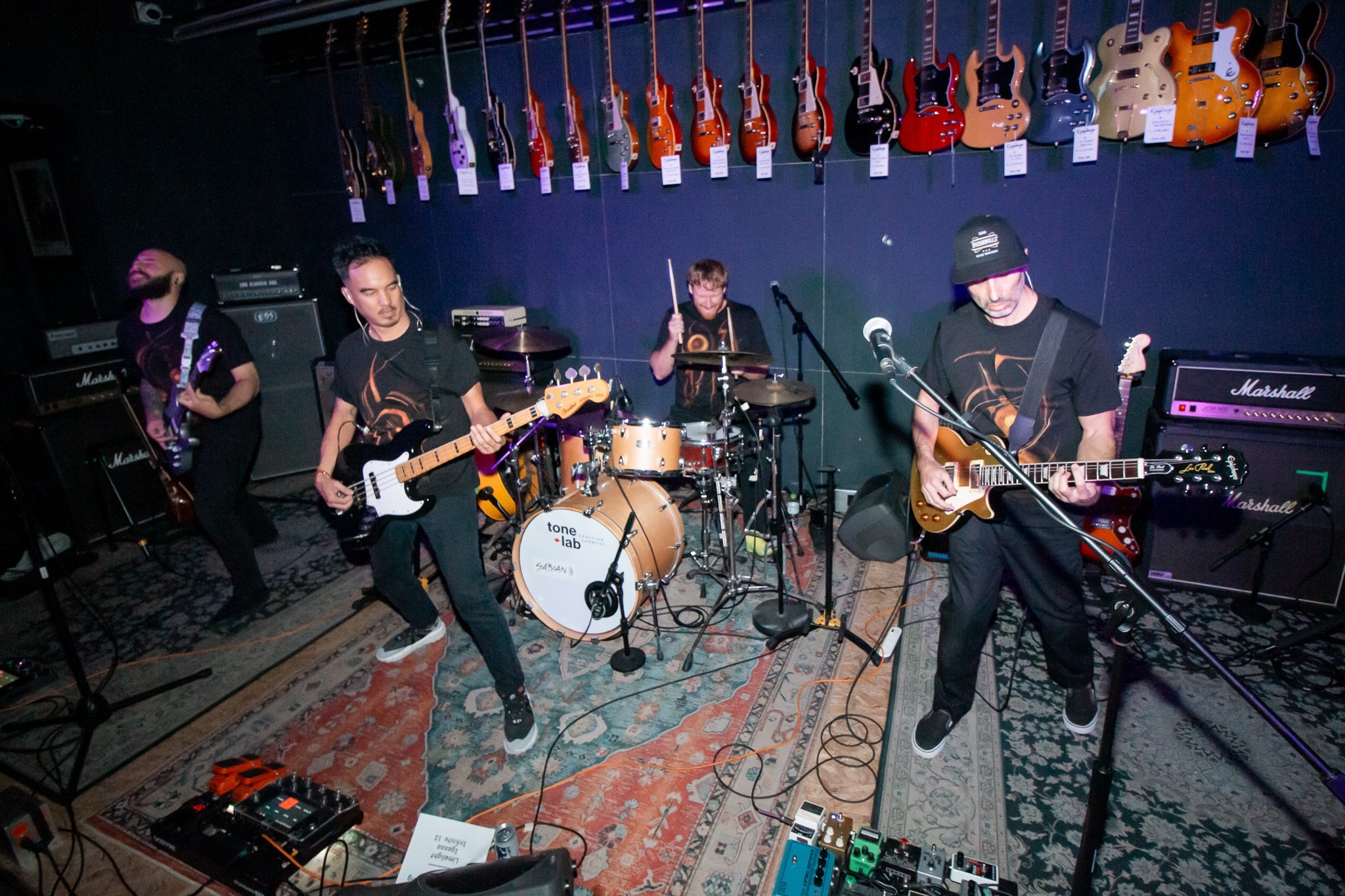
Bedlam Royals rarely announce themselves loudly, and their album release show for “The Gap” was no exception. The room filled slowly, word having spread that this was less a typical local gig and more a full unveiling, the kind of night where a band steps fully into a sound they had been creating. With Toanraw setting the tone with their own brand of post-punk melancholy, the stage was already primed for a night built on mood rather than spectacle before Bedlam Royals had played a single note.
What followed was a set that leaned into patience over payoff. Rather than chase the immediate reaction so much of the scene is built around, Bedlam Royals let tension accumulate, trusting the room to stay with them through slow builds, sudden shifts, and long stretches where atmosphere did more talking than any vocal line could. It made for a rare kind of quiet in the crowd, one built on focus rather than restraint, and it set the stage for everything the album release was meant to represent.
TOANRAW OPENS THE NIGHT WITH POST-PUNK AND DARKWAVE TEXTURES
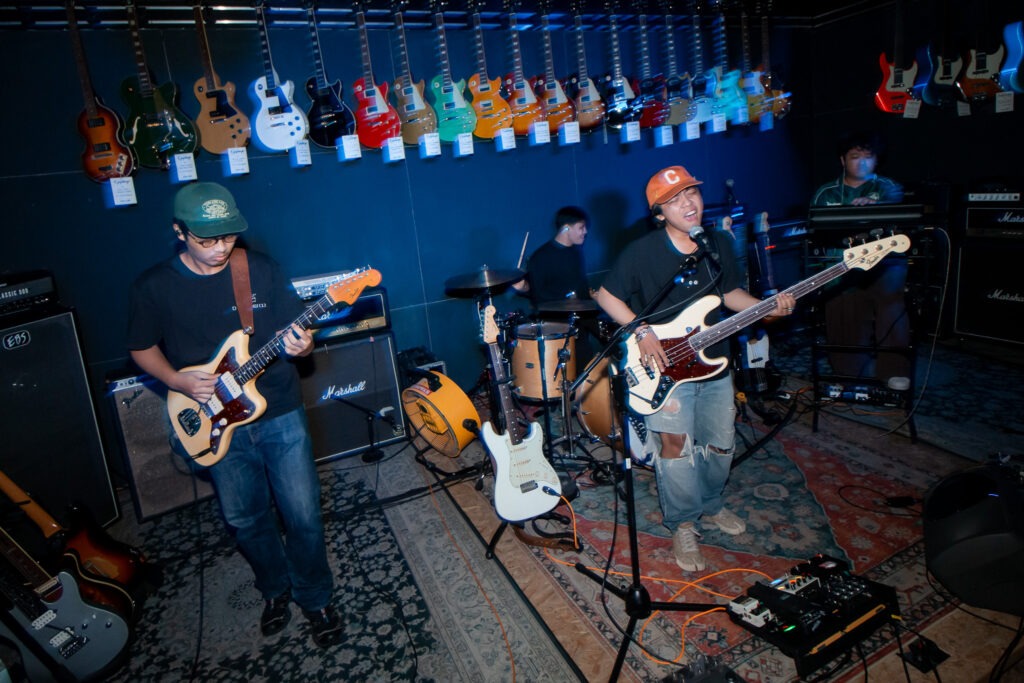
The night began with Toanraw, a name still fairly new to the scene but one that made its intentions clear from the first chord. Built around the songwriting of Nguyễn Minh Toàn and joined on stage by a rotating cast of musicians from From Da Slum Collective, the project draws on post-punk, darkwave, and a strain of melancholic Vietnamese rock that few local acts are currently working in. It made for an opening set that felt distinct rather than transitional, less a warm-up act and more a statement of where this corner of the scene is headed.
Over roughly thirty minutes, Toanraw leaned into mood rather than momentum. The chord progressions took their time, circling back on themselves in ways that rewarded attention, while the interplay between the instruments on stage did most of the emotional work. The band played the set a guitar short this time around, a gap that could easily have thinned out the sound. Instead, the remaining players filled the space with enough restraint and precision that the absence barely registered, a small but telling sign of how tightly the material is put together even at this early stage.
Toanraw still has no official recordings out, though the group has promised something is on the way. In the meantime, they have been steadily working both Hanoi and Saigon, leaving a clear impression wherever they turn up, and a run of summer festival dates is already locked in. On this showing, the wait for a proper release feels like the only thing standing between Toanraw and a much wider audience.
BEDLAM ROYALS TURN A SAIGON ALBUM RELEASE INTO A LESSON IN ATMOSPHERE
Some bands need a vocalist to grab your attention. Bedlam Royals don’t.
From the moment the first notes hit, the room was wrapped in a cold atmosphere that felt strangely cinematic. It made me imagine standing somewhere in the middle of a Serbian winter, bleak, quiet, and uncomfortable in the best possible way. The guitars carried that feeling before the band suddenly shifted gears. The tempo changed, the dynamics opened up, and I realized nobody had to say a single word. The music was already speaking.
That’s probably the best way to describe Bedlam Royals.
They let the music do the work. Throughout the set, I kept thinking about Tool, not because they sound like a copy, but because they share that same philosophy. The songs breathe. Time signatures twist around each other, riffs evolve rather than repeat, and every transition feels intentional. It’s complex without feeling like it’s trying too hard to prove a point.
One of the biggest surprises of the night was seeing Papa Lâm, best known as the drummer of Vietnamese pop-punk band 7uppercuts, completely transform behind the kit. This wasn’t the energetic pop-punk drumming many people know him for. Here, he played with patience, precision, and restraint, becoming another piece of the band’s hypnotic atmosphere.
And honestly… I think I’m doomed.
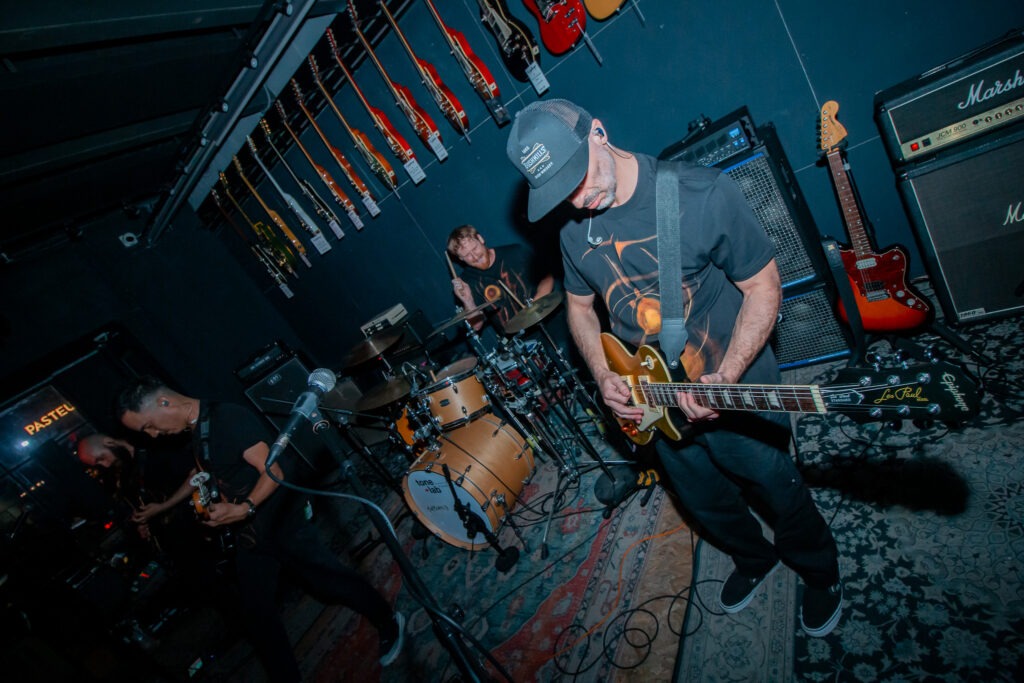
The deeper the set went, the more I found myself falling into the gloomy world they created. Layers of noise crawled underneath the riffs, creating these unsettling textures that almost scratched under your skin. It wasn’t clean. It wasn’t comfortable. It was beautiful because of that.
The rhythm section deserves its own spotlight. The bassist, clearly carrying a jazz fusion background, brought an unexpected amount of movement to the stage. At one point, he jumped straight into the crowd without breaking the groove, instantly lifting the energy while everyone else stayed locked into the music.
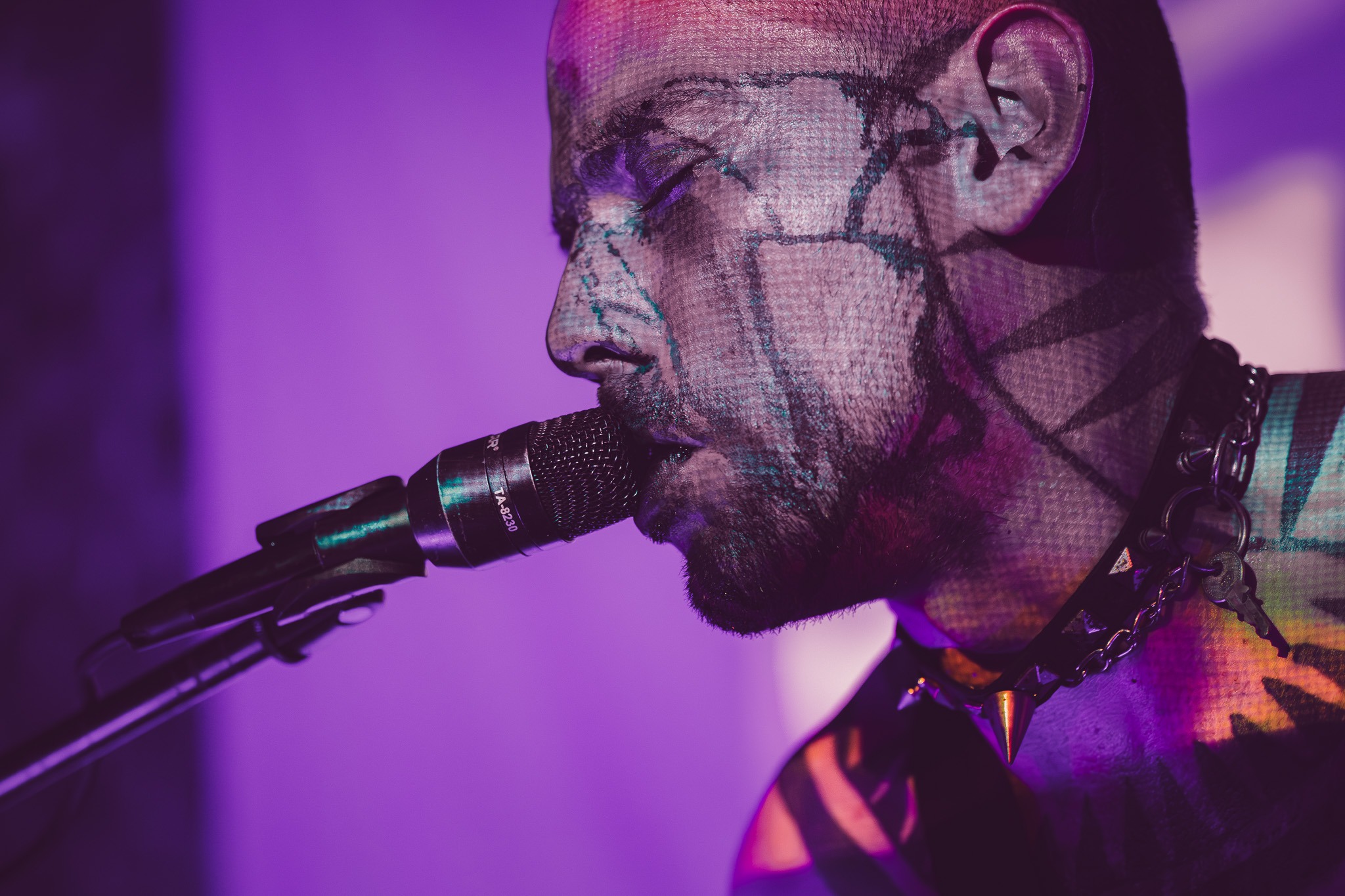
Viktor’s vocals were another highlight. He didn’t need to scream every second to command attention. His slow, haunting delivery filled the room with tension, making the eventual screams hit even harder. The contrast worked perfectly with the band’s constantly shifting dynamics.
The sound design deserves credit too. Ambient layers, feedback, and background noise are all effects glorifying parts of the songs. Combined with thick, chugging riffs, they built an atmosphere that constantly kept you guessing. Every time I thought I knew where a song was heading, another unexpected turn arrived.
One thing I rarely experience at local shows happened that night. People actually stopped to listen.
Instead of immediately looking for the next mosh part, much of the crowd stayed focused on every movement happening on stage. You could feel everyone trying to absorb the music before reacting to it. That kind of attention is something you don’t often see, especially in heavier scenes.
Of course, the energy eventually exploded. Even as the final two songs approached, nobody looked ready to leave. The bassist once again threw himself into the audience, turning the room into one shared performance rather than separating the band from the crowd.
The last song started almost romantically. Slow, dreamy, even danceable for a brief moment. Beautiful tremolo melodies floated over the room before everything collapsed back into crushing heaviness.
Before leaving the stage, the band took a moment to thank their friends and everyone who helped make “The Gap” happen. It was simple, genuine, and a nice reminder that records like this are never built alone.
Then the dancing started again. More movement. More moshing. More voices shouting together. The closing moments couldn’t have been more fitting: heavy riffs shaking the room while the audience chanted for one more song.
“The Gap” isn’t an album that demands your attention through flashy moments. It earns it by building tension, atmosphere, and emotional weight until you’re completely pulled into its world.
Bedlam Royals built an experience that lingered long after the last note faded.
FULL GALLERY BY CA KOI LANG THANG