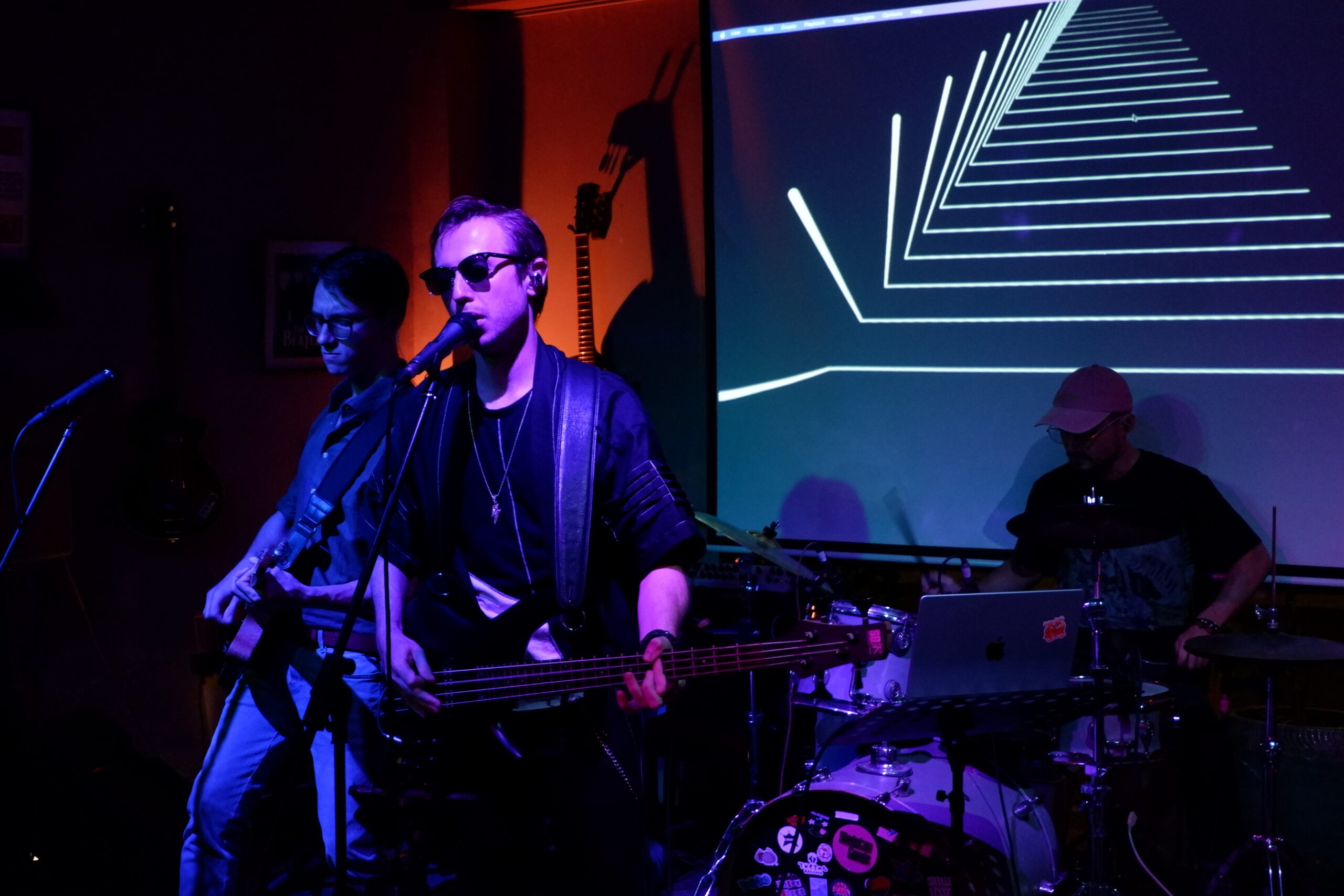

Born between the giants, five hours from both Sydney and Melbourne, Artifact grew up in Wagga Wagga’s ebb-and-flow scene, traveling to cut their teeth while building a sound that refused to fit a single box. What began as a dual-vocal djent-leaning project evolved into a heavier, groove-driven, hook-aware unit shaped by five distinct voices and years of DIY refinement.
On their first Asian run, they brought that identity to Vietnam, testing new material from the upcoming EP “Umbra” and meeting a new crowd head-on. Read how their Saigon stop went in our full show report: Dưới Lòng Sài Gòn — A Stormy Night Underground
Between Two Cities: Growing Up Regional
Ethos:
Can you tell us a bit more about the place you’re coming from? What is the local ecosystem like? Venues, bands, and the scene in general.
Artifact:
(Michael)Wagga Wagga is situated between Melbourne and Sydney. So it’s like that halfway point, between those two big cities. It’s kind of a small town. There are about 60,000 people, 80,000?
So it got the small-town vibes, but a fair bit is happening there. For the metal scene, it’s very quiet at the moment. We do occasionally get a few bands every year that play metal. But it’s not too busy most of the time. Bands that are based in Wagga Wagga have to travel a lot. We’re in a good spot because we’re within that halfway point between both Sydney and Melbourne. (5-hour drive to both)
E:
How has being from where you are shaped you as a band? How did the local scene influence your sound now?
A:
(Michael) I wouldn’t say the local scene influenced our sound. I feel like our sound is more rooted in a lot of the bands that we listen to, that aren’t necessarily local, but that we’ve discovered online. The bands that were situated in Wagga Wagga, when we were in high school, definitely influenced us to do what we do now.
For example, Windwaker played a few hometown shows here. A lot of those boys are from Wagga Wagga. After I saw them, I was like, “Wow, that’s really, really fun. I’d love to do this someday.” So I guess we are doing it now. (hahaha) We also got to play with them a couple of times, which was cool. Their guitarist is now playing live for Polaris, which is pretty awesome.. They’re a massive band.
(Bec) I think that the fact that we all listen to different kinds of metal and other music, and also I’m eleven years older than Hayden, so our music comes together with everyone’s influences. It’s very different.
E:
Australia is notoriously known for mass-producing metalcore bands, especially since the early 2000s. To mention a few that definitely shaped our taste in metalcore – Parkway Drive and I Killed The Prom Queen. What’s your opinion? Why is Australia such a big source of this genre?
A:
(Michael) That is a very good question.
(Hayden) Something in the water. (hahaha)
(Michael) I’m not too sure why we like the metalcore sound so much. I’d say we don’t all listen to the same bands.
E:
Does it make it harder for you guys to get through the clutter and “claim your spot”? Or does it actually make it easier because there are so many opportunities to play with bands?
A:
(Michael) I would say it makes it a bit easier, especially because of where we are based. I consider it a regional area. So, not one of those big cities, we get a big blend of bands. A lot of the festivals and shows that we play are not necessarily stacked with just metalcore bands. Lineups can consist of folk metal, death metal, deathcore, and all these different types, hardcore as well. So it’s actually quite a dynamic scene, and it’s very rare that we do get into a field where it’s just metalcore itself.
(Harvey) I think it’s easy to get a show, but hard to stand out in Australia for sure.
(Bec) Even though we export a lot of metal. They’re all quite different-sounding. It is a lot of Australian metalcore, but they don’t sound the same. It’s quite odd when people ask me like – How do we sound and what’s our genre?
E:
That was our next question, actually. (hahaha) Where do you see yourself? How does Artifact fit into this huge metal ecosystem of Australia?
A:
(Harvey) A lot of Australian bands are trying to always do something different. They don’t want to sound like someone else. They want to create something that hits them. They want to create an identity as a brand.
First, I think a lot of people, when they’re writing music, they’re like, how can we make something that’s going to make people listen, make us more memorable?
E:
You guys had a chance to play with some pretty big names in Australia. What was the main lesson from playing with them?
A:
(Bec) I learned that vocalists are not allowed to use throat numbing spray when they have a sore throat. (hahaha) Because you could numb your vocal cords, which could result in you not using a proper technique when singing.
(Michael) I learned from Rok (Rupnik) from Within Destruction that it is possible to juggle your career in music as well as your career at home. He was telling me a little bit about his job. He was actually working while he was touring Australia. And a lot of those other guys were as well. So that kind of gave me a bit of hope. It’s like, yeah, we can still chase the dream and be able to feed ourselves as well, which is very important.
E:
This links so well with the next one. What are the nonmusical skills that you’ve maybe adopted from playing with the bigger bands? For example, branding yourself, marketing, and promotion of the band?
A:
(Harvey) Oh, that’s a thing that came before the single we just released. I basically got my entire marketing strategy from Windwaker and Northlane. Seeing how they post on social media, how frequently they’re sending PR emails. I basically grabbed all of that information, did the exact same thing, which is probably one of the main reasons why we ended up being by bus splice.
Sending out alerts, emails, then doing the social media posts, and trying to do all the main stuff. I guess it’s like an extra step to the music to make it more noticeable.
(Hayden) Learned about some good places to eat in America. One that doesn’t make you poo real bad. (hahaha)
E:
What would you say is the most underrated place to play in Australia?
A:
(Hayden) Wagga is definitely one of the places. You don’t see many people walking around the street in metal shirts or whatever. But when Northlane came last time at the main venue called Tilly’s, it was absolutely packed. And you don’t even see that many people out even on a Saturday night when everyone’s out drinking and partying and stuff. So Wagga is definitely underrated for sure.
(Harvey) For a nightclub, which is like its primary function, to say it, more busy with a bunch of metalheads rocking out to a show. It’s just pretty eye-opening and it makes us a little bit frustrated at the venues because it’s like, “Hey, there’re people that like this, you know, let’s get more shows on.”
But because a lot of the time the venues change owners, then it just kind of, it peaks and then dies out. Kind of ebbs and flows like that.
E:
What would be your favorite place? From your personal experience? The best place to play ever?
A:
(Michael) I’m going to say Baso. I love that space.
(Harvey) We did play with Orpheus in Melbourne. Also, Max Watt’s, that one is pretty cool.
(Hayden) It’s great! You’re walking from the street in Melbourne and then you take an elevator. The club is underground.
(Harvey) It’s great because, you know, if you’ve got some really tall people in front of you and you can’t see the band, the floor is actually angled.So you can come up in the higher areas and get a good view and be able to enjoy everything.
E:
Does that affect moshing in any way?
A:
(Harvey) It’s like a square room right in the middle. So it’s basically the mosh part; it just stays inside that area. You’re a lot safer up there.
E:
Are there any myths about the Australian scene that you like to demystify? i.e. crowds are getting quite crazy in the shows
A:
(Hayden) Well, Australian mosh pits can get extremely violent. Sometimes they get very rough. Like, my first mosh pit was To The Grave. I got kicked in the face as soon as I got in.
(Harvey) Depends on who’s playing. The bands like Alpha Wolf, To The Grave, even I kind of look at the pit and don’t go in. I used to go in there and have fun, let it rip. But,I watch those bands and I always think to myself “Ohh, that’s too much for me.” But it’s so good because they love it. But if you’re on the ground, they’ll make sure you’re up. Apart from the fact it looks really scary, everyone’s going up there looking after you.
(Bec) As a female, I’m still always very safe. People always protect you and pick you up and stuff. I think that the crowds are generally great. Maybe for some of the hardcore or pop punk bands it’s a bit different. But I feel like the heavier the band is, the better the crowd is. (hehehe)
Finding the Voice(s): From Concept to Cohesion
E:
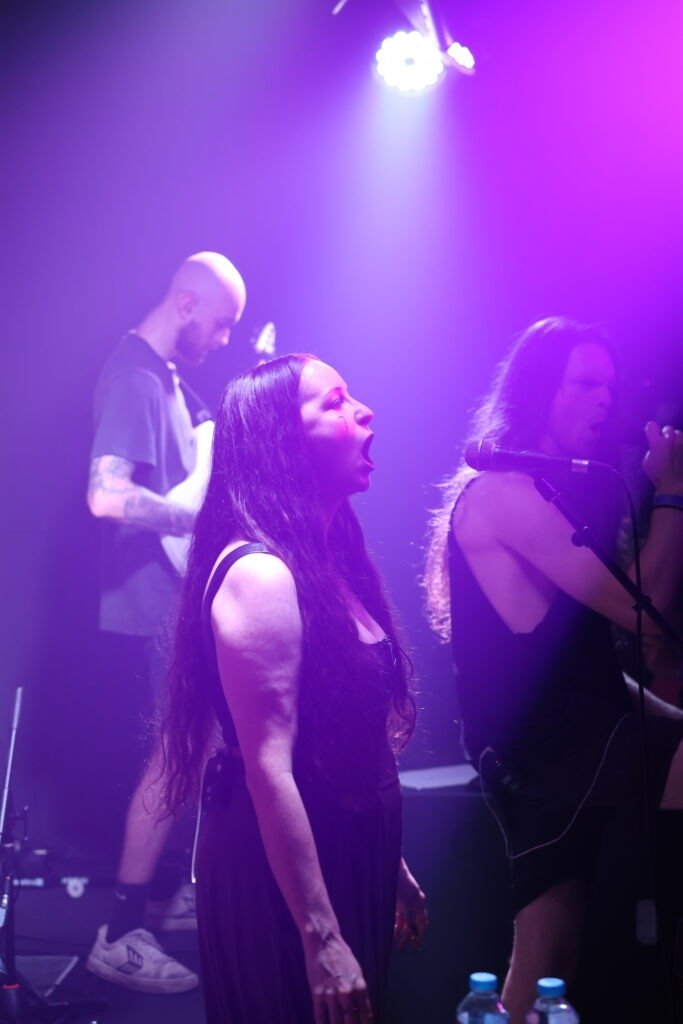
Let’s talk a bit about Artifact. First of all, two vocals – why, how did it come to that, was it planned from the beginning?
A:
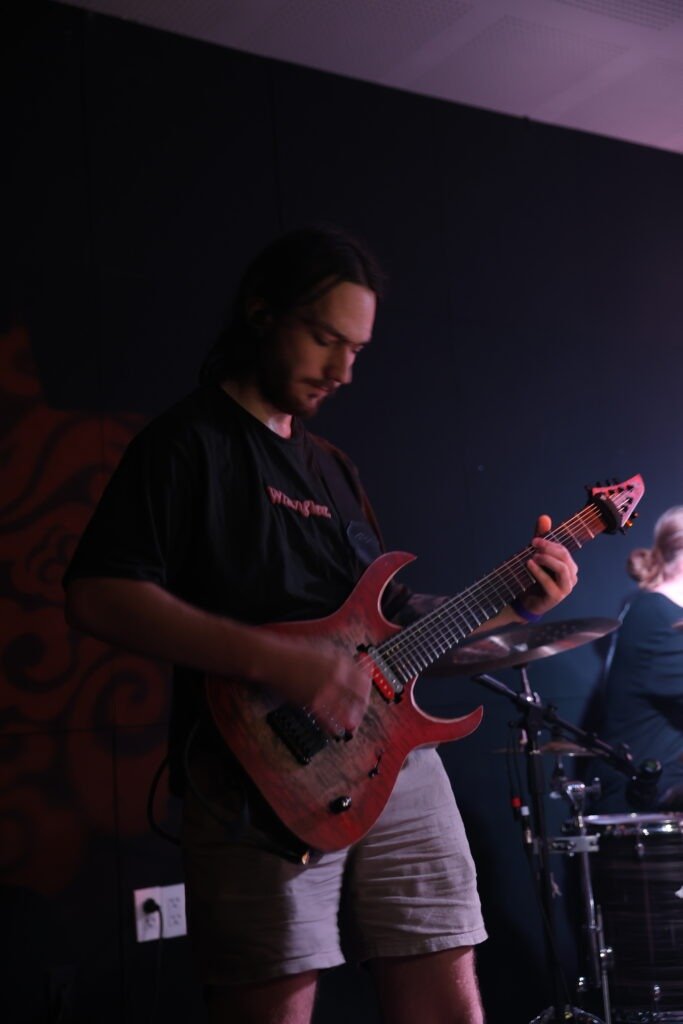
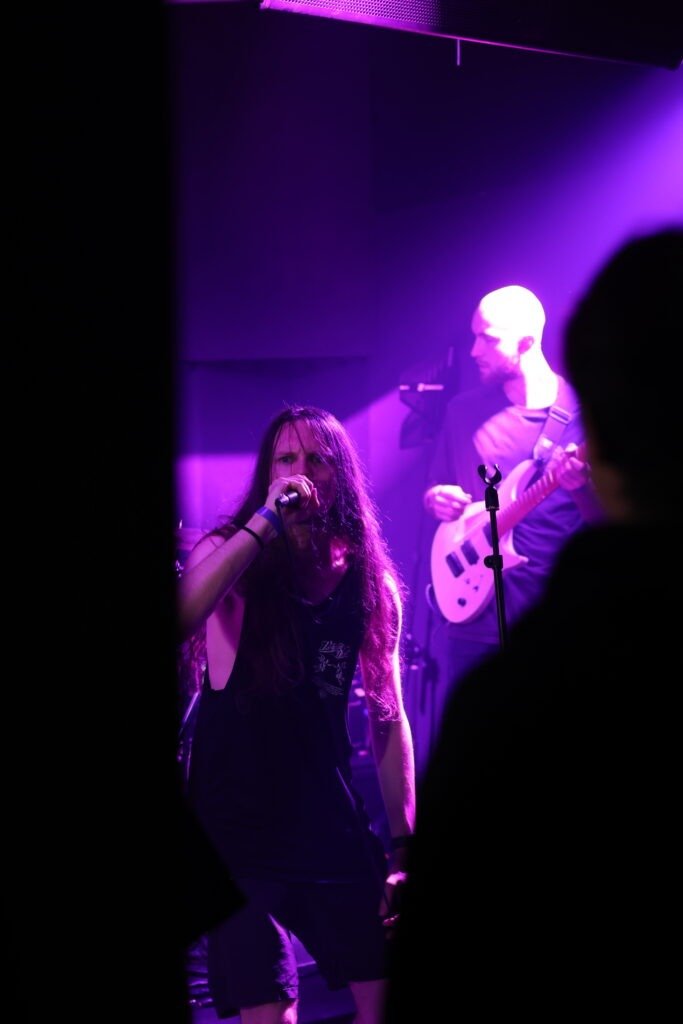
(Michael) I can answer that one. This band started as a project with myself and our old guitarist Andrew. At the time, we both kind of had a vision for the sound and we took inspiration from bands like Spirit Box, Jinjer and Volumes. Even though Jinjer doesn’t have two vocalists. We wanted female centered or better said; female orientated cleans, and really harsh, aggressive vocals. We just kept doing what we were doing, the vision might change, we would just go with the flow and see what happens, see what everyone else can add to the sound. That was the original idea.
E:
What percentage of that original idea would you say is still present in the band?
A:
(Michael) Probably like 20%, but honestly, I have absolutely no complaints with that because I think what we make, at the moment, it catches me by surprise in a good way. I don’t feel like it should fall into place with the original vision or whatever. I think it should be cohesive and everyone adds their own flair and just see what happens, see what comes from it.
(Harvey) Originally, this band was going to be a very shitty female and male two-part vocal with a djent band behind them, and we’ve come so far from that. I’m really happy that we have. Because we would still be doing djent. (hahah)
E:
There’s the obvious shift in your sound. You’ve just mentioned it yourself. What caused this? Was it the change in lineup, or you simply grew out of that original sound?
A:
(Michael) Yeah, pretty much a complete shift. This project started out with just two people, but I strongly believe that if you’re going to have people in this band, I want everyone to add their own flair to it. So it’s rewarding, for them, and this stuff that comes out from it, it catches me by surprise. I can’t anticipate what riffs Hayden is going to come out with. Nathan is going to come up with the fills in that, and Bec comes up with some crazy lines. You can’t anticipate it, but it’s always a welcome surprise. When I hear it, I’m like, “Oh my gosh, this is great!”
(Bec) A lot of the time, the stuff that we’ve come up with separately, after we bring it together, we find it is already working. Like a big coincidence, it’s very funny.
E:
How do you write hooks? Do you plan in advance if you’re going to put any and where?
A:
(Hayden) It all starts basically from a riff, and then I sort of… I don’t know… I like a lot of European metal and melodic death metal, stuff like that. So I think a lot of my riffs have a lot of melody in them from the get-go. Then the chords that I use, all the different sounds in there that I don’t think are “normal” in the Australian metalcore scene. It’s hard because I sometimes overwrite, and then we get stuck in a box with what we can layer melodically. But sometimes it is also just the way that we write, sometimes the melody comes really quickly because it’s sort of the only thing you can do on it.
E:
Do you purposefully create more space for the vocals when writing too?
A:
(Michael) Usually, vocals will come last. The boys would get together and write the main skeletons of the song, and we would tweak them afterwards. Bec and I, we kind of just go; “I’ll do this section, you do this. This sounds right.” We just work it out and then Bec would write her parts, and I’ll write my parts. Sometimes it changes.
(Hayden) A lot of the times we sort of accidentally write the full song with one another. But then we bring it to the team and we rewrite it sort of a bunch of times until it sounds right. After everyone’s got their input on it, we put the vocals on and the rest is history.
(Nathan) I’ve been in the band for just over a year now. And so before that, I’ve been writing a lot of things on my own. And so I’m sort of used to writing full songs. Instrumental songs on my own. So I’ve just brought a lot of that to the table when I joined the band. We’ve kind of just gone through any ideas that I’ve had and full songs that I’ve written and broken them down, and then rewritten them as a band. That’s how we’ve come up with our new EP. Before that, Insurrection was all Hayden and Andrew.
E:
Has your work with Lance Prenc (producer of Alpha Wolf, Thornhill, Dealer, Void of Vision) affected your writing style and the way you’re planning for new songs?
A:
(Hayden) I would say it hasn’t really affected us too much because, for the most part, we’ve self-produced and he did mixes. From the last EP we did, it sort of gave us a new standard. He gave us the standard of how to make it sound good and how to get everything we need to send to him and what works well together. But in terms of writing, I don’t think it’s changed anything yet because we haven’t actually had a producer before, so it’s all just in-house.
E:
Let’s imagine you could work on your material with any producer. What are the non-negotiable parts of your music that you would never change, no matter the input you get from an outside person?
A:
(Michael) If we start getting nullified by another party, then I’d say that’s a no, because the music that’s going to come out, I feel, anyway, has to sound like us.
(Hayden) We are at that point in time, which is exactly what the new EP is. It’s just a digital snapshot of everything we’ve been through, all the music we’ve listened to and where we are now, and it’s a long way from our last EP, very different, very good.
E:
Does playing in front of the audience affect your writing in any way? Maybe you notice something while playing your shows. People are really reacting well with this kind of part. It could be a breakdown or a solo.
A:
(Hayden) I think most people don’t care about my solo. (hahaha) So I like to write less, but I still want to play solos because they’re fun. The breakdowns are always like the fruit of the tree, like the cherry on top. When you get to that part in any song, it’s always the best part for the crowd. It’s always so much fun to watch. Sometimes you don’t even want to move. All you want to do is watch the crowd, that’s it.
E:
Nowadays tools musicians use are very available. Did any of the modern gadgets open some new creative doors for you?
A:
(Harvey) For sure! We haven’t really been able to use our new live rig to its full extent, but I feel like, for the shows, the ceiling for what we can get away with and what we can do is going to grow a lot.
(Hayden) I think our live shows are definitely an open door for us to be able to play better, to feel better. To feel more confident on stage and comfortable moving freely. Not damage the ears that much. I think that’s one of the most important things about the gear. That’s why we got it in the first place.
The “Umbra” Chapter: Heavier, Groovier, and More Human
E:
At this point, what would be the one song that you would call the best representative of Artifact’s sound?
A:
(Hayden) I’d have to say “NASCENT”. I think that’s a pinnacle from the last EP.
(Harvey) For me it’s “Atrophy” , it’s still not released. It’s coming up in the next three months and I think it’s going to kill it.
(Hayden) It’s way too hard. (hahaha)
E:
What’s the biggest production evolution in your opinion? From day one to now?
A:
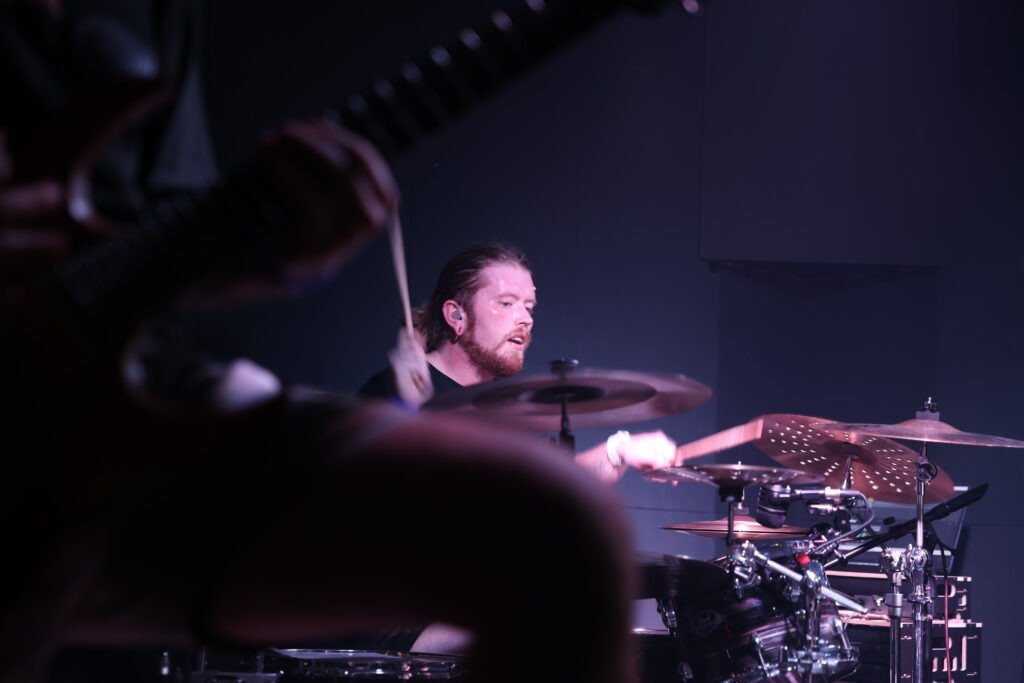
(Hayden) This guy over here, Nathan! He’s the production master. (hahaha) From the previous EP, we sort of only… Our imagination wasn’t very wide like his is. So what we would do with production synths and layers and stuff like that was kind of basic. But now we’ve got him and he’s just a wizard behind the computer. He likes to add a lot of crazy noises as well.
(Nathan) I wouldn’t say that I’m the best guitar player. I do play guitar. I love playing guitar. But I’ve really found, I’ve really fallen in love with producing. I do my own, producing and mixing and stuff at home on my computer. I just really like experimenting with different sounds and just trying new things. Sometimes they sound really weird, but I love trying new things and incorporating that new stuff into our music.
E:
You’ve mentioned earlier everything that went into making this new EP. What’s the concept of your upcoming release? If any.
A:
(Hayden) I can give a musical standpoint conceptually. For a couple of the songs, I wanted it to sound heavy as hell, but a bit proggy but groovy. I wanted it to be danceable, I want people to move in our pit. We just want it to be crushing yet uplifting at the same time.
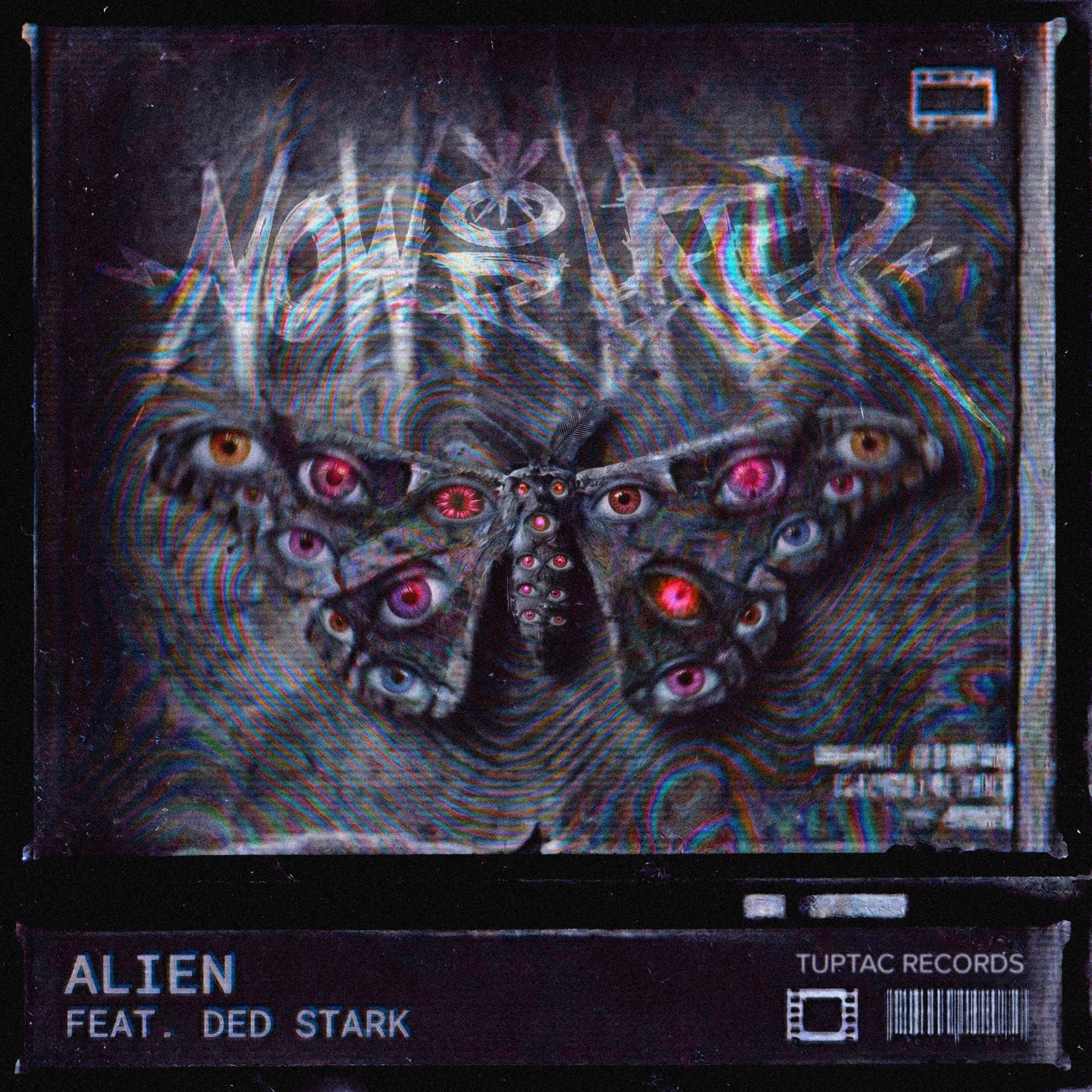
(Michael) The EP coming out is titled “Umbra,” which means the darkest part of the shadow. So the main concept behind the EP, lyrically, takes inspiration from our own personal lives, and Carl Jung’s idea of shadow work. Integrating that stuff into your personality. A lot of the songs kind of delve into bad experiences that some of us share, like neuroticism. Each track flows into the other in a way. So it’s kind of like a journey of self-discovery. And then right at the end, it’s a bit more uplifting. It sort of ties everything together, and wraps the whole thing up. The main message is: Life can be rough, but you’ve got to see the beauty and just keep pushing forward. Keep living it fully because it’s dichotomous. It’s not just shit. It’s not just good. It’s a blend of things. That’s kind of what we’re exploring.
(Hayden) It’s a roller coaster. It’s not linear.
E:
What’s your approach to balancing the story without over-explaining?
A:
(Bec) We have a conversation just like that. Michael and I will chat like, “Okay, how do we get this concept across without putting the song in too much of a box that it won’t be relatable more generally, but also in a way that we’re not over-explaining it? We want it to be a song that tells a story that’s personal to us, but can also be interpreted in a bit more of an ambiguous way. And then we critique each other’s lyrics a little bit and ask for help, and then figure it out.
(Michael) A lot of the lyrics that Bec and I were writing, a lot of the time, I’ll ask her like, “Hey, is this in your face.” It’s like we try to paint the picture with the words or mostly talk about feelings and less with less facts
(Hayden) I don’t know that much about the lyrics, but I know from reading some of them that a lot of the time they don’t sing directly about things that have happened. I feel like a lot of our lyrics are very timeless and could be related to someone down the road 50 years from now. One could find our music and then relate to it very heavily. So it’s very timeless.
E:
This is your first time playing abroad. What do you expect from this tour?
A:
(Michael) I honestly have no idea. But so far, I’m just very impressed and very happy with the hospitality and I don’t know, at the moment, that’s all I can really speak on. We feel incredibly welcomed. So far, it’s been a journey, a big adventure.
(Harvey) Expectations for us, I’m not too sure. I’m just hoping we get on stage, have people enjoying music, and we have a blast now.
E:
Did you have a chance to check any of the bands playing with you on this tour?
A:
(Michael) I’ve checked Now or Later, Bec is gonna be a fan I’m sure. (hahaha)
(Bec) I’m also very excited about Aggressive Raisin Cat. I’m kind of obsessed with them. They’re gonna be huge.
E:
What is your next move after the tour? Releasing the new EP, obviously. Anything else?
A:
(Harvey) We’ve got a new music video coming out. I believe one more visualizer. And we want to put up another. As far as the release schedule goes. We’re just going to get the main singles out, go with the flow, see what happens. And I believe we might be cooking an Australian tour, but I’m not too sure on that just yet.
(Hayden) I just want to keep writing. Get back into it as soon as possible.
E:
A question everyone gets – What would be your advice for the young kids/bands starting out now?
A:
(Bec) Just do it!
(Hayden) Just believe, anything is possible if you really put your heart and your mind to it. You can do anything. I’m 22 and I’m overseas with my band. I never in a million years thought it would happen. But it’s reality, I’m here. It’s crazy, but if you believe in it and you try, you could do anything.
(Michael) I have something to add too. If your scene is not really big, check out the online community. There are forums, Facebook pages, get involved and chat with people. Pick their brains. Heaps of people are creating and looking for others. Metalheads, especially on the production side of things. That’s pretty much all they really want to talk about. Show good etiquette and it will get you from A to B. That’s how you get contacts..
Another piece of advice, if you ever want to start a band, probably the most useful thing you can do is get really comfortable using a DAW (Digital Audio Workstation) like Cubase, Reaper, anything like that. Get comfortable with that. Get some ideas down, some demos. I can almost guarantee you’ll find someone, even if they’re across the globe, who will work with you. With the technology we have, it’s possible.
(Bec) I was always singing growing up as a kid, but I just, I don’t know why, but I had this idea in my head that you have to wait for someone else to come give you permission? Like, tell you that you’re good enough and then you can go and do it. Nope! Just start writing songs on your own, believe in yourself, that’s it. Then you will find the right people, and you don’t need to wait for anything. Start making the music, then you’ll start playing shows. It’s actually that simple.
(Hayden) It really is just about being yourself and letting the music come through that, and that’s how people will notice you. Authenticity is good.
Artifact’s story is regional persistence meeting creative reinvention: five people folding disparate influences into songs that hit hard without losing heart. From learning on crowded floors in Melbourne to stepping onto foreign stages, they’re proving momentum comes from honesty, community, and iteration. With “Umbra” on the horizon, and a first Asian tour under their belt, Artifact feel less like visitors and more like a band stepping into their lane at the right time.